FROM PERIMENOPAUSE TO POST-MENOPAUSE

The blood test built for menopause.

One test that looks properly. For the women who've been told they're fine, and the ones who'd rather not wait to find out.

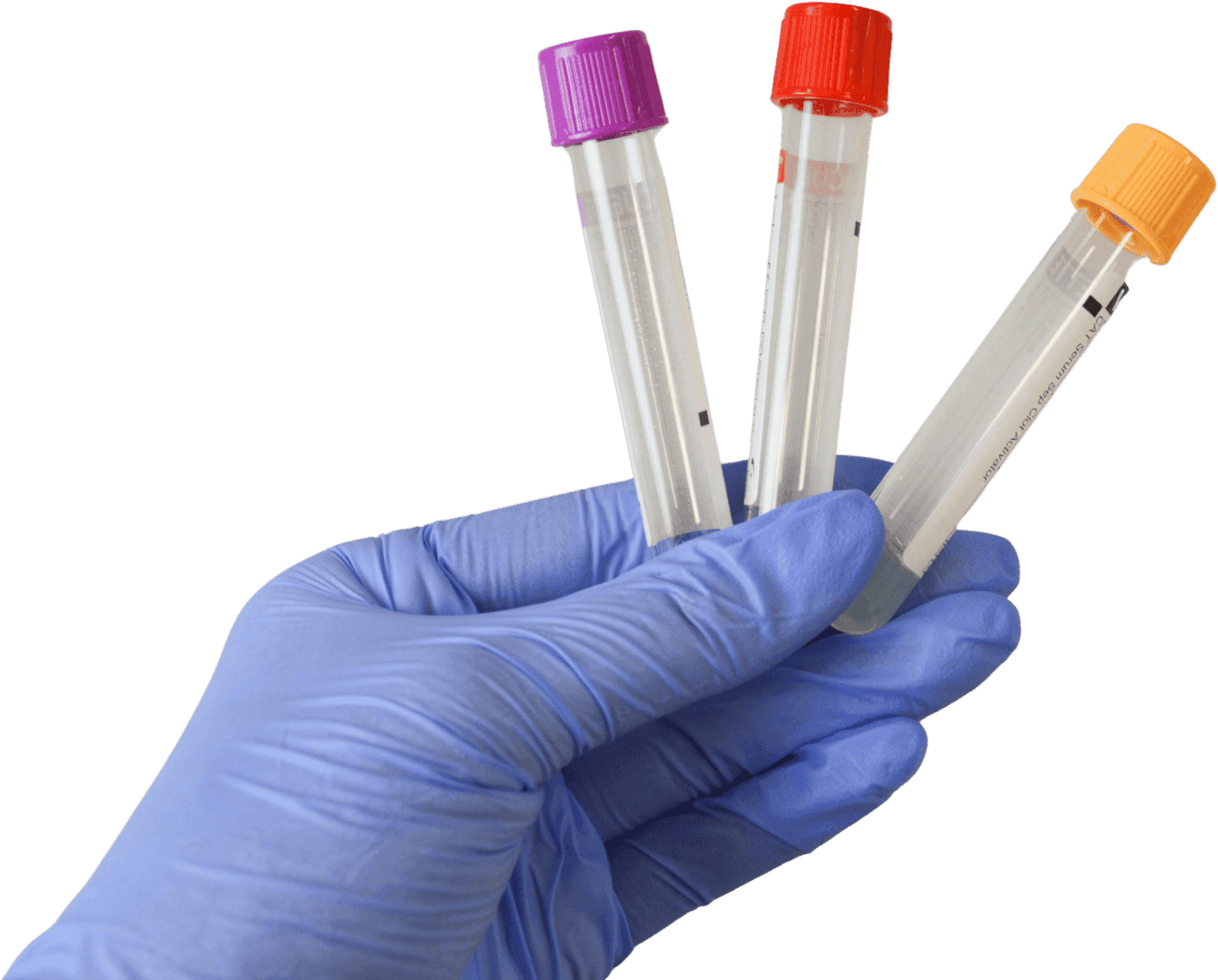
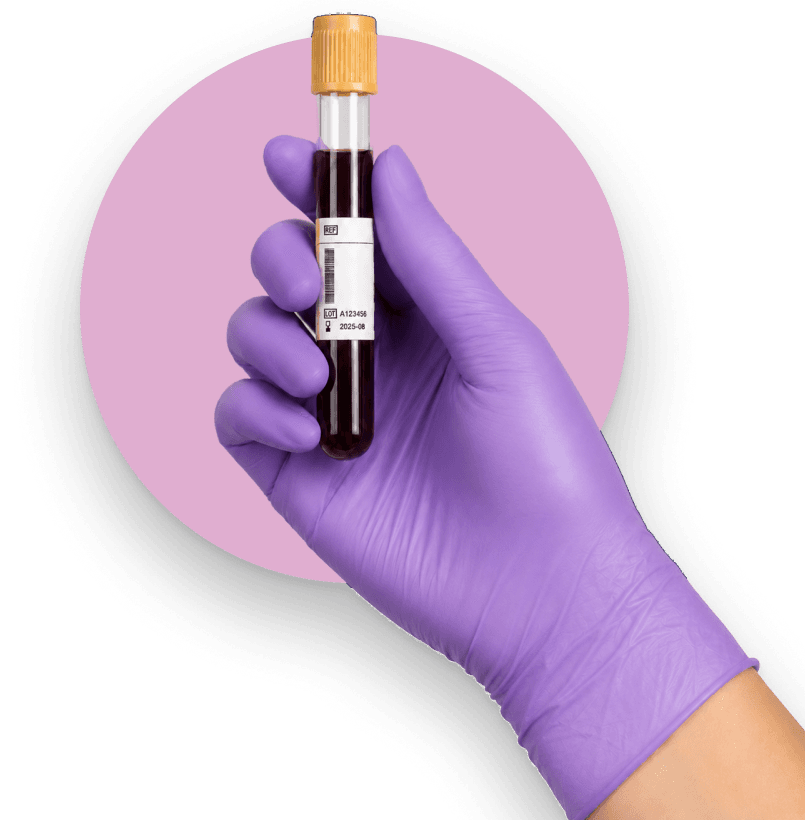
A gloved hand holding a blood sample
  • BUILT FOR MENOPAUSE
  • VENOUS BLOOD, NOT A FINGER PRICK
  • RESULTS IN THREE WORKING DAYS

CHOOSE HOW YOU TEST

One test. Two ways to do it.

RECOMMENDED

Every six months

Two tests a year, so you can see what changes.

Two tests a year. Inc. VAT and your blood draw.

  • Five systems measured in one blood draw
  • Venous blood draw at clinic or home
  • Every result read in the context of you
  • Your results online and a PDF to share
  • A new test every six months, for as long as you stay
  • Your change measured against your baseline

Twelve month minimum, then cancel any time

One test

A single snapshot, whenever you want it.

Charged once. Inc. VAT and clinic fee.

  • Five systems measured in one blood draw
  • Venous blood draw at clinic or home
  • Every result read in the context of you
  • Your results online and a PDF to share

Klarna, pay in 3

WHAT YOU GET BACK

Every number, and what it means for you.

Where your number actually sits.

LOWHIGH

Hormones

Oestradiol

E2 · pmol/L

256.7

WITHIN RANGE

Written for you.

You told us about your cycle, your symptoms and your history, so your results are read in context.

Yours to keep. Yours to share.

Every result sits in your account, and downloads as a PDF you can print and share.

Your dashboard, your panels, and every marker with its own reading.

See a sample report

Your first test is the baseline.

Everything after is measured against it.

Heart & Metabolism · LDL

LDL Cholesterol

Within range · 12% lower

Latest · Nov 2026

2.9

Previously 3.3 mmol/L

May 25Nov 25May 26Nov 26
  • Outside range · high
  • Worth noting · high
  • Within range

Your LDL has fallen at every retest since your baseline and now sits inside the expected range.

WHAT TRACKING SHOWS YOU

One test tells you where you are today. Two tell you which way things are moving. Three tell you whether what you are doing is working.

The shifts that matter most are the ones you cannot feel. Testing now does not mean expecting bad news. It means having something to compare against later.

Example shown for illustration.

HOW IT WORKS

1.

Tell us about you.

A short questionnaire about your cycle, your symptoms and your history.

It’s what makes your results yours, rather than a textbook average.

A member, calm
2.

Book your test.

A trained phlebotomist takes a venous sample at a clinic near you, or comes to your home.

A phlebotomist with sample tubes
3.

Get your results in three working days.

Every marker explained, every value placed in your personal context, yours to keep and to compare against from now on.

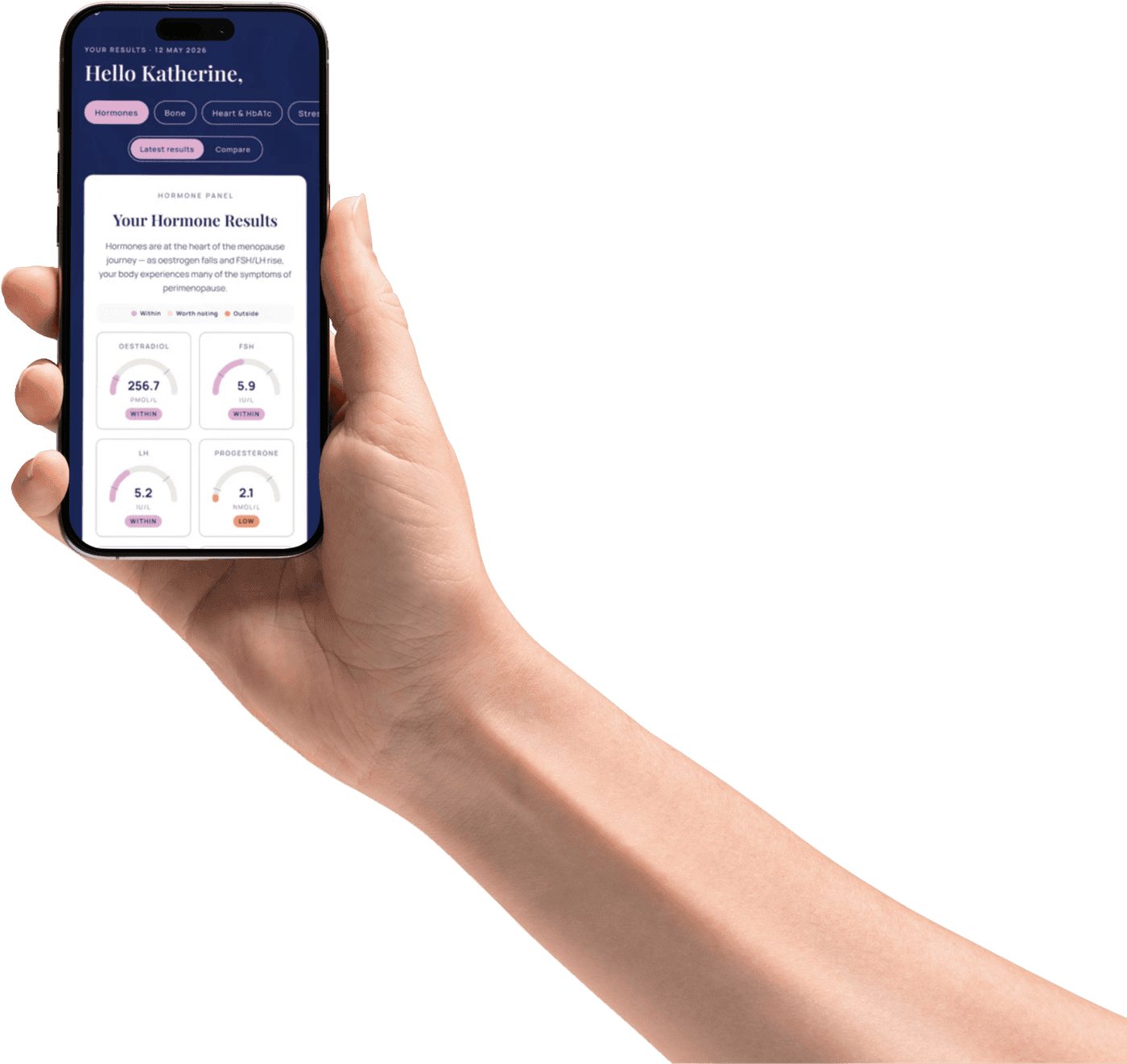
Your results on a phone
4.

Test again in six months.

Markers take a few months to move. A second test at six months shows which way things are heading, not just where they are.

A marker traced across four tests

See a sample report

BEFORE BUYING

Do I need to have symptoms to take a test?

No. Many women choose to test before symptoms begin, to establish a baseline. This makes it easier to track changes over time and see what's shifting before anything feels wrong.

Can I test if I'm on HRT or hormonal contraception?

Yes. Tell us what you take when you fill in your questionnaire, and we read your results with that in mind. HRT and hormonal contraception change some hormone levels, so your report shows which markers they affect.

Is this a finger-prick test?

No, we use a venous blood draw. A trained nurse or phlebotomist takes a small sample from your arm, which usually takes a few minutes. You can visit one of our partner clinics, or have a phlebotomist come to you at home or work for a small additional charge.

Do I need to fast before my test?

Yes. Your test includes markers that need a fasted sample, so please don't eat for eight hours before your blood draw. You can drink water as normal. Most women find a morning appointment easiest.

Know your normal.

One blood draw, five areas of your health, and context you can do something with.