Menopause Symptoms: The Full List
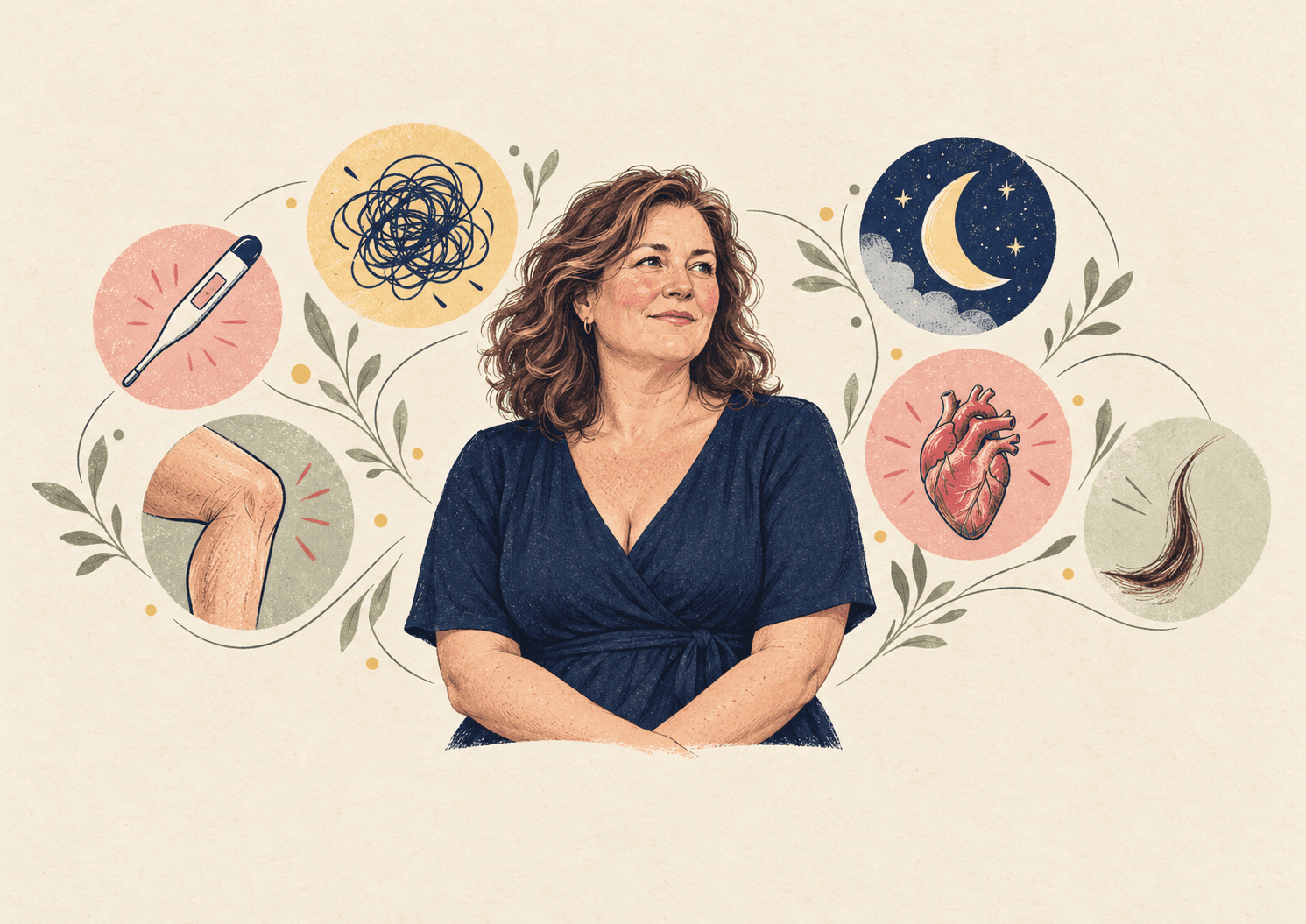
Menopause can show up in far more ways than hot flushes and irregular periods, from anxiety and brain fog to aching joints, tinnitus and dry eyes, and plenty of women live with several of them before anyone mentions hormones. If you have been feeling unlike yourself and can't pin down why, seeing the full list can give you and your GP more to work with.
For years the public picture of menopause stopped at the flush and the missed period. A woman whose perimenopause began with anxiety, sore hands or a mind that kept dropping words had little reason to link those changes to her hormones, and the people she turned to for help often didn't make the link either. Knowing the wider list gives you words for what you notice and a better starting point for a conversation with your GP.
What are the most common symptoms of menopause?
Hot flushes lead the list, affecting around 75% of women during the transition. As oestrogen falls, the hypothalamus, which acts as the brain's thermostat, tolerates a narrower band of temperatures before it triggers a cooling response. Small shifts in body heat that the body once ignored now set off the full routine of sudden heat, a flush across the face and chest, sweating, and the chill that follows.
Night sweats are the same process after dark, with broken sleep as the added cost. Palpitations, a racing, fluttering or irregular heartbeat, belong to the same vasomotor group.
Oestrogen influences the autonomic nervous system, and as levels change, that system can respond differently. A racing or irregular heartbeat can have other causes too, so any new or persistent change deserves a check with your GP.
Can menopause cause anxiety, low mood and brain fog?
It can, and these symptoms deserve more attention than they tend to get. Anxiety and low mood rank among the most commonly reported perimenopausal symptoms. For many women they arrive before any obvious physical change, which makes the hormonal link even easier to miss.
Oestrogen helps regulate serotonin, dopamine and the GABA system, the chemical messengers behind mood and calm. As oestrogen swings, that support becomes less steady. Women with no history of mental health difficulties can find themselves struggling in perimenopause, and the shifting biology underneath is thought to be part of the reason.
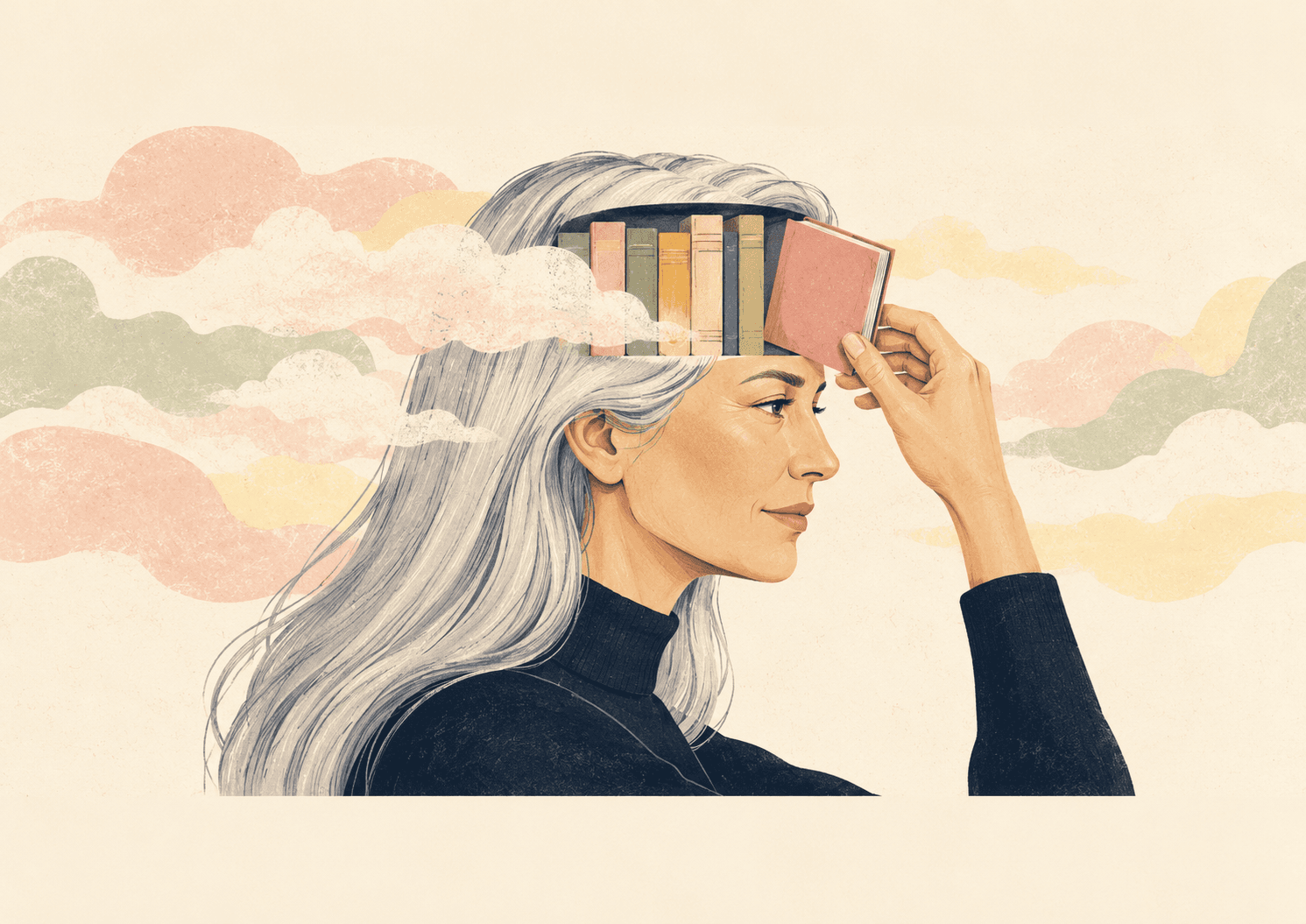
Brain fog covers the lost words, the dropped threads and the struggle to concentrate. Oestrogen supports the brain regions responsible for memory and attention, and researchers using standardised cognitive tests have measured these changes during the transition.
For most women the fog lifts in time. Our guides to brain fog in menopause and perimenopause anxiety and mood changes go further.
Why do my joints ache and why can't I sleep?
Sleep problems come partly from menopause itself and partly from the rest of this list, including night sweats, falling progesterone and the higher cortisol that can come with hormonal upheaval.
Joint pain affects around 50 to 60% of perimenopausal women and is one of the symptoms most often put down to something else. Oestrogen has anti-inflammatory effects and supports healthy cartilage, so falling levels are thought to be one reason joints can ache at this stage, especially the hands, knees and hips.
Joint pain has plenty of other possible causes, and some women see a rheumatologist before anyone thinks to consider their hormones as part of the picture. You can read more in our guide to joint pain in menopause.
The menopause symptoms most women are never told about
A handful of symptoms catch women off guard until they look them up. The list includes tinnitus, dizziness, burning mouth syndrome, changes in taste or smell, restless legs, dry eyes, tingling in the hands and feet, and changes in body odour. Some women also feel electric shock sensations, a brief and intense jolt that often comes moments before a hot flush.
Oestrogen acts right across the nervous system, and each of these symptoms has a plausible hormonal or neurological explanation. Each can also have other causes, which is why anything new is worth mentioning to your GP.
Vaginal dryness, urinary symptoms and sex
Vaginal dryness, pain during sex, recurrent urinary tract infections and urinary urgency sit under one name, genitourinary syndrome of menopause, or GSM. They affect a significant proportion of post-menopausal women.
Unlike hot flushes, these symptoms tend not to improve with time on their own. Safe and effective treatments exist, so there is no reason to put up with them in silence, and a GP or menopause specialist can talk you through the options. Our guide to vaginal dryness and GSM explains more.
Skin and hair changes in menopause
Skin loses around 30% of its collagen in the first five years after menopause, a faster rate than ageing alone would produce. Thinning hair, a wider parting and heavier shedding are linked to the change in the balance between androgens and oestrogen, which can produce a mild version of the pattern familiar from male hair loss.
The same shift may help explain why some women notice new facial hair at the same time.
Making sense of your own symptoms
Symptoms overlap, come and go, and differ from one woman to the next, so no single symptom tells the whole story. A note of what you notice, and when, gives you and your GP a clearer picture to work from. Some women also find it helpful to know their own hormonal normal and see how it shifts over time, which is the thinking behind what we test.
Questions women ask
What are the first signs of perimenopause? Irregular periods and hot flushes are the best-known signs. Many women notice anxiety or low mood first, often before any obvious physical change, which makes the hormonal link easy to miss.
Can menopause cause joint pain? Yes. Around 50 to 60% of perimenopausal women have joint pain, most often in the hands, knees and hips. Oestrogen has anti-inflammatory effects and supports cartilage, so falling levels are thought to play a part. Joint pain has other possible causes too, so persistent pain is worth raising with your GP.
Do menopause symptoms go away? Some ease with time, and brain fog lifts for most women. Genitourinary symptoms such as vaginal dryness and urinary urgency tend not to improve without treatment, and safe, effective treatments exist for them.
References
Portman DJ & Gass ML. (2014). Genitourinary syndrome of menopause. Menopause, 21(10): 1063–1068.
Maki PM & Henderson VW. (2012). Cognition and the menopause transition. Menopause, 19(2): 119–120.
Thornton MJ. (2013). Estrogens and aging skin. Dermato-Endocrinology, 5(2): 264–270.
Magliano M. (2010). Menopausal arthralgia: fact or fiction. Maturitas, 67(1): 29–33.
Ready to know your normal?
Choose your testKeep reading.
 Symptoms
Brain Fog in Menopause: What Is Happening in Your Brain
Losing words and your train of thought is common in perimenopause. What oestrogen does in the brain, the role of sleep, and what the research shows.
2 min read
 Hormones
Stress and Menopause: Cortisol, Your Hormones and What Helps
Why stress can feel harder in perimenopause, how cortisol and oestrogen interact, and the approaches with evidence behind them for feeling steadier.
6 min read
 Treatment
How to Talk to Your GP About Menopause (Including What to Say If You Get Dismissed)
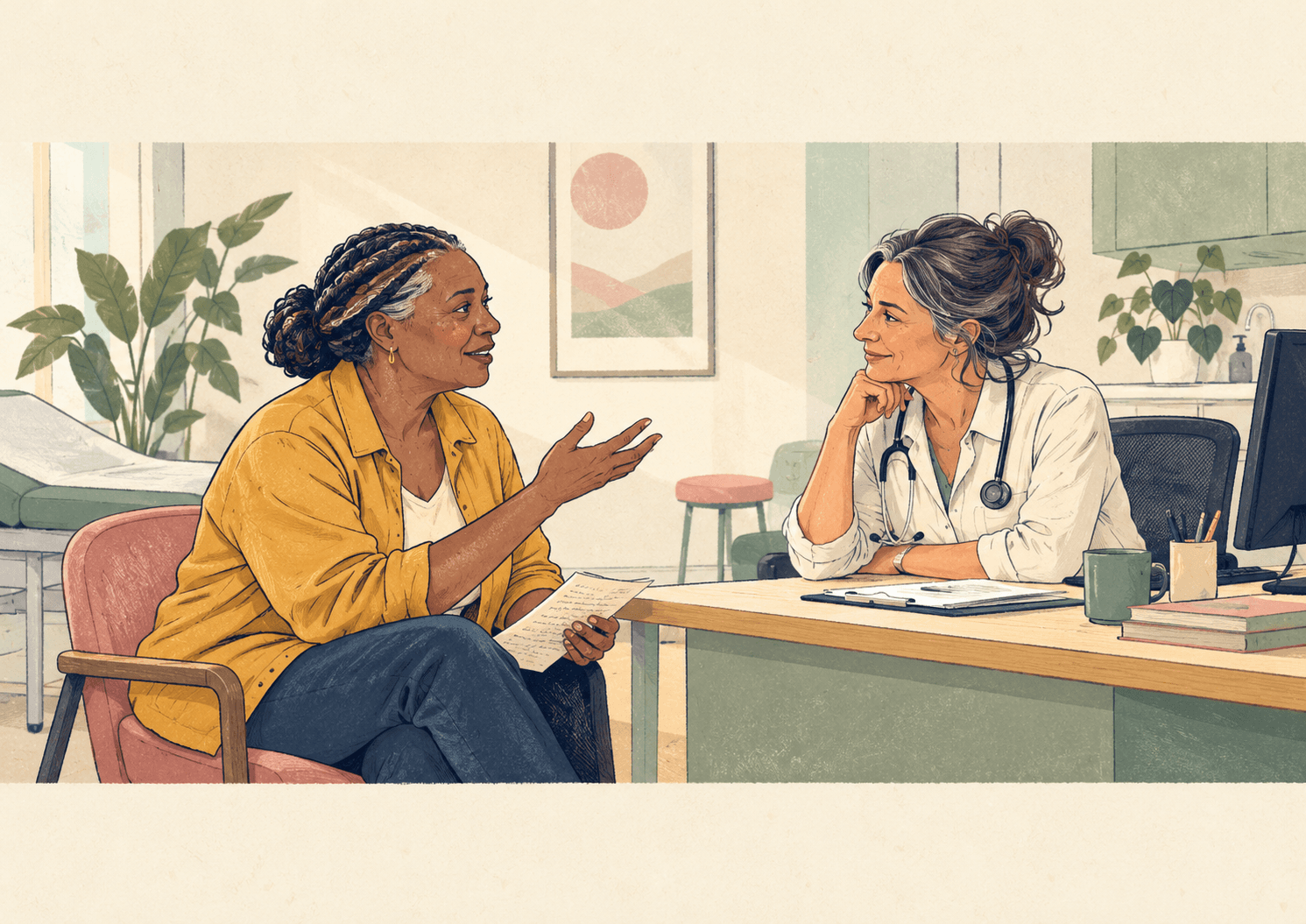
What to bring, what to ask for and what to say if you feel dismissed. A practical guide to getting more from a GP appointment about perimenopause.
4 min read