What Is Perimenopause? The Stage Nobody Warned You About
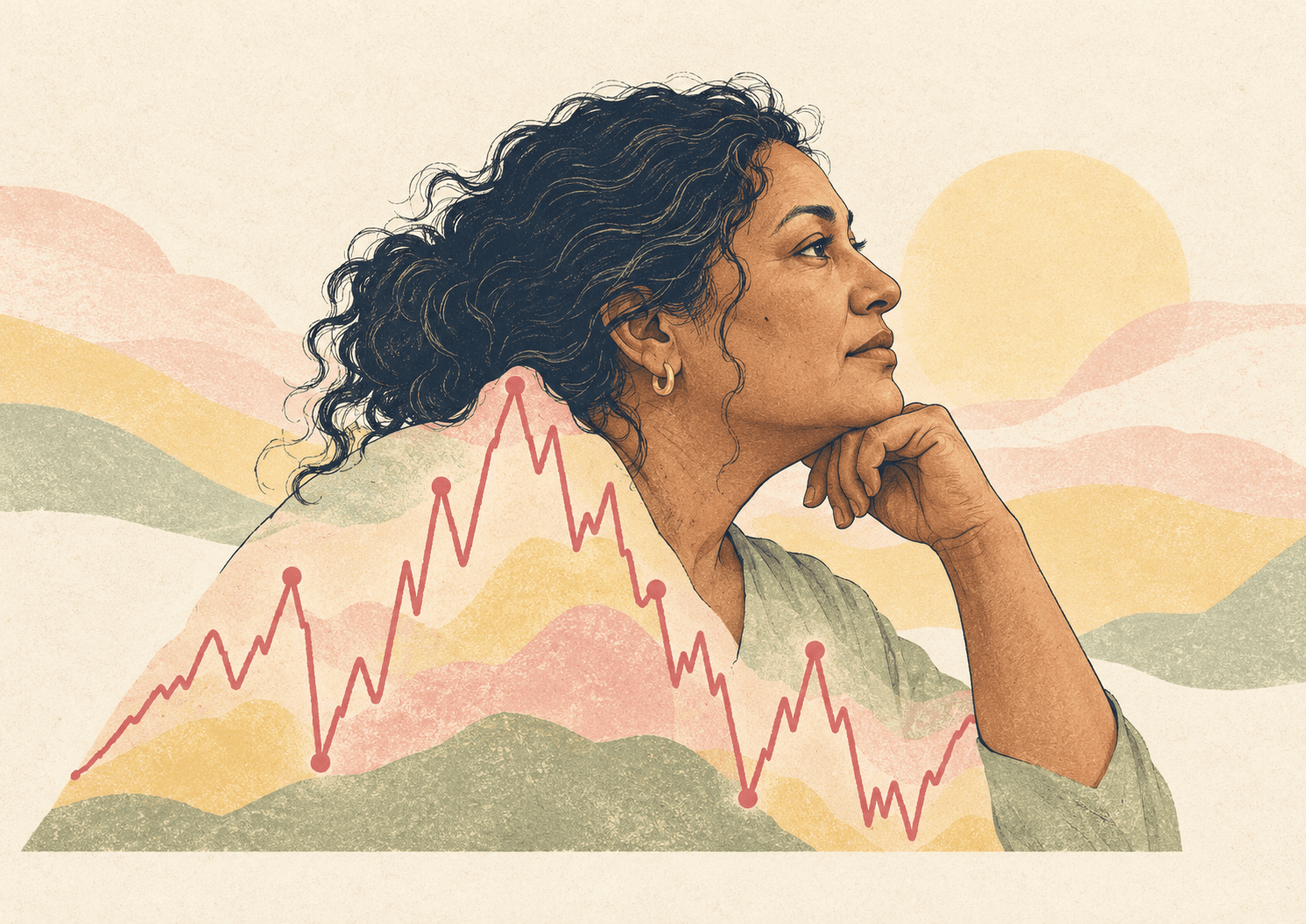
Plenty of women reach their mid-40s with wrecked sleep, a new kind of anxiety and periods that have lost their rhythm, and put it all down to stress. Perimenopause is the stretch of years before the final period, when the ovaries begin to wind down and hormones start to change. For most women it begins somewhere in the mid-40s, lasts four to eight years on average, and ends with the last period.
It is often the most disruptive part of the whole transition, and the part women feel least prepared for. Some are told that a normal FSH result means nothing hormonal can be going on. Perimenopause has sat on the edges of the cultural and clinical conversation for decades, so many women live through it without knowing it has a name.
What is perimenopause, exactly?
Perimenopause starts when your hormones begin to shift. Oestrogen and progesterone become less predictable, and follicle-stimulating hormone (FSH) starts to climb. It ends with your final period, and everything after that point counts as postmenopause.
The change during these years is erratic. Oestrogen swings about, sometimes rising higher than usual and sometimes dropping sharply, before it settles into a downward trend. Those swings, as much as the overall fall, are thought to drive many of the most disruptive symptoms.
The body keeps adjusting to a moving target, which may help explain why so many women describe one day as manageable and the next as inexplicably awful.
When does perimenopause start?
Most women enter perimenopause between 45 and 47, though it can begin in the early 40s or even the late 30s. The average age of menopause in the UK is 51, so for many women the transition begins years before they would expect anything hormonal to be on the agenda.
Early perimenopause is the phase women and clinicians find easiest to miss. Periods may still arrive fairly regularly.
The symptoms that turn up first, such as anxiety, broken sleep, brain fog and irritability, can feel more like stress than hormones. Making the connection depends on knowing that perimenopause exists and that it can look like this.
How long does perimenopause last?
On average it lasts four to eight years, though research puts the range at roughly two to twelve. A 2015 study in JAMA Internal Medicine, which followed women for up to 17 years, found that hot flushes and night sweats lasted a median of 7.4 years.
That is a sizeable part of a woman's life, and it deserves proper support. Our guide to how long perimenopause lasts looks at what shapes your own timeline.
What does perimenopause feel like?
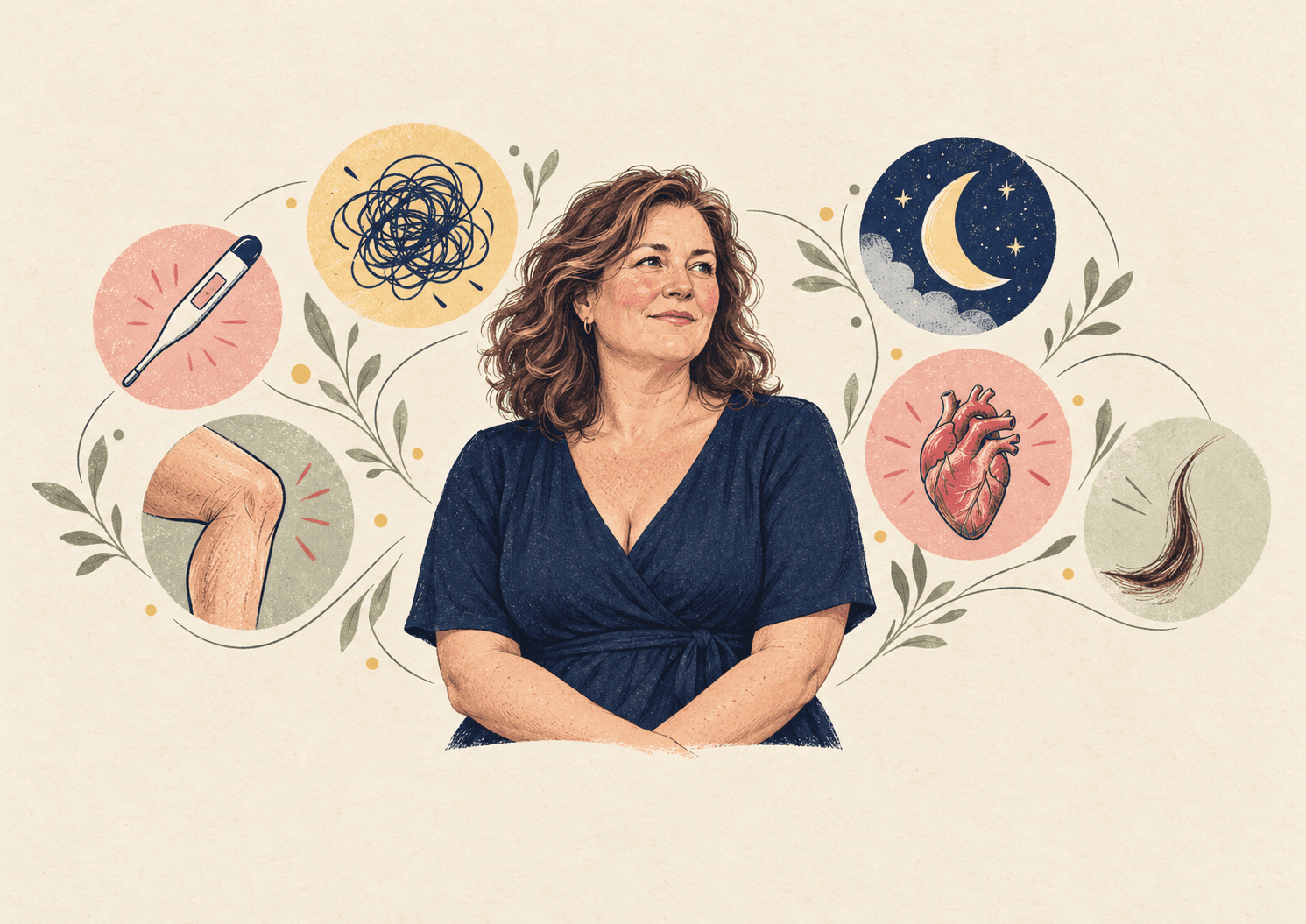
The list of symptoms runs longer than most people expect. Hot flushes and night sweats get the headlines, yet anxiety, low mood and emotional ups and downs often come first in early perimenopause, sometimes before your periods change much at all. Joint pain, palpitations, brain fog, changes in libido and changes to skin and hair all belong on the list too, and all are easily put down to stress or getting older.
Mood deserves particular attention. Oestrogen helps regulate serotonin, dopamine and the GABA system, the chemical machinery your brain uses to manage emotion.
When oestrogen fluctuates, that machinery can wobble. Women who have never had a mental health problem can find themselves struggling with anxiety or low mood during perimenopause, and the shifting hormonal environment is thought to be part of the reason.
Seeing the hormonal side of the picture widens the conversation you can have about support, and our guide to perimenopause mood changes and anxiety covers it in more depth.
Can a blood test tell you if you are in perimenopause?
During perimenopause your hormone levels can shift a great deal from one week to the next, so a single blood test gives an unreliable picture. A normal FSH result on a Tuesday does not mean perimenopause is not happening.
NICE guidelines recognise this. For women over 45, NICE describes perimenopause as a clinical diagnosis based on symptoms and age, and says blood tests are not routinely needed.
Testing still has a place, just a different one. What a blood test can offer is visibility across your hormones, heart, bone and metabolism, and a second test shows which way things are moving. That is a different kind of picture from a single result on a single day.
If you are in your mid-to-late 40s with typical symptoms, that guidance supports a conversation with your GP built around how you feel, whatever one blood result shows. Our guide on how to talk to your GP about menopause can help you prepare.
Blood tests earn their place over time. A series of results, compared against your own earlier baseline, can show a pattern that one snapshot cannot, and that idea of knowing your own normal is the thinking behind the test.
Questions women ask
Can perimenopause start in your 30s?
It can. Most women enter perimenopause between 45 and 47, though it can begin in the early 40s or even the late 30s. With an average menopause age of 51 in the UK, the transition often starts years before women expect it.
Do you still have periods during perimenopause?
Yes. Perimenopause ends with your final period, so periods continue throughout it, and in the early phase they may still arrive fairly regularly. Anxiety, broken sleep and brain fog can appear before your cycle changes much at all.
Can a normal FSH test rule out perimenopause?
No. Hormone levels can shift a great deal from week to week during perimenopause, so a normal FSH result on one day does not mean perimenopause is not happening. NICE guidelines say that for women over 45, perimenopause is diagnosed by a clinician from symptoms and age, and blood tests are not routinely needed.
References
NICE. (2019). Menopause: diagnosis and management. Guideline NG23.
Avis NE, et al. (2015). Duration of menopausal vasomotor symptoms over the menopause transition. JAMA Internal Medicine, 175(4): 531–539.
Harlow SD, et al. (2012). Executive summary of the Stages of Reproductive Aging Workshop +10. Menopause, 19(4): 387–395.
Ready to know your normal?
Choose your testKeep reading.
 Foundations
What Is Menopause? Everything You Need to Know
What menopause is, when it happens and what changes in your body, from hormones to heart and bone health. A plain-English guide, backed by research.
4 min read
 Foundations
Menopause Symptoms: The Full List
From brain fog and joint pain to palpitations and dry skin, the full list of menopause symptoms, including the ones most women are never told about.
3 min read
 Hormones
Stress and Menopause: Cortisol, Your Hormones and What Helps
Why stress can feel harder in perimenopause, how cortisol and oestrogen interact, and the approaches with evidence behind them for feeling steadier.
6 min read