Oestrogen: What It Does, Why It Matters, and What Happens When It Falls
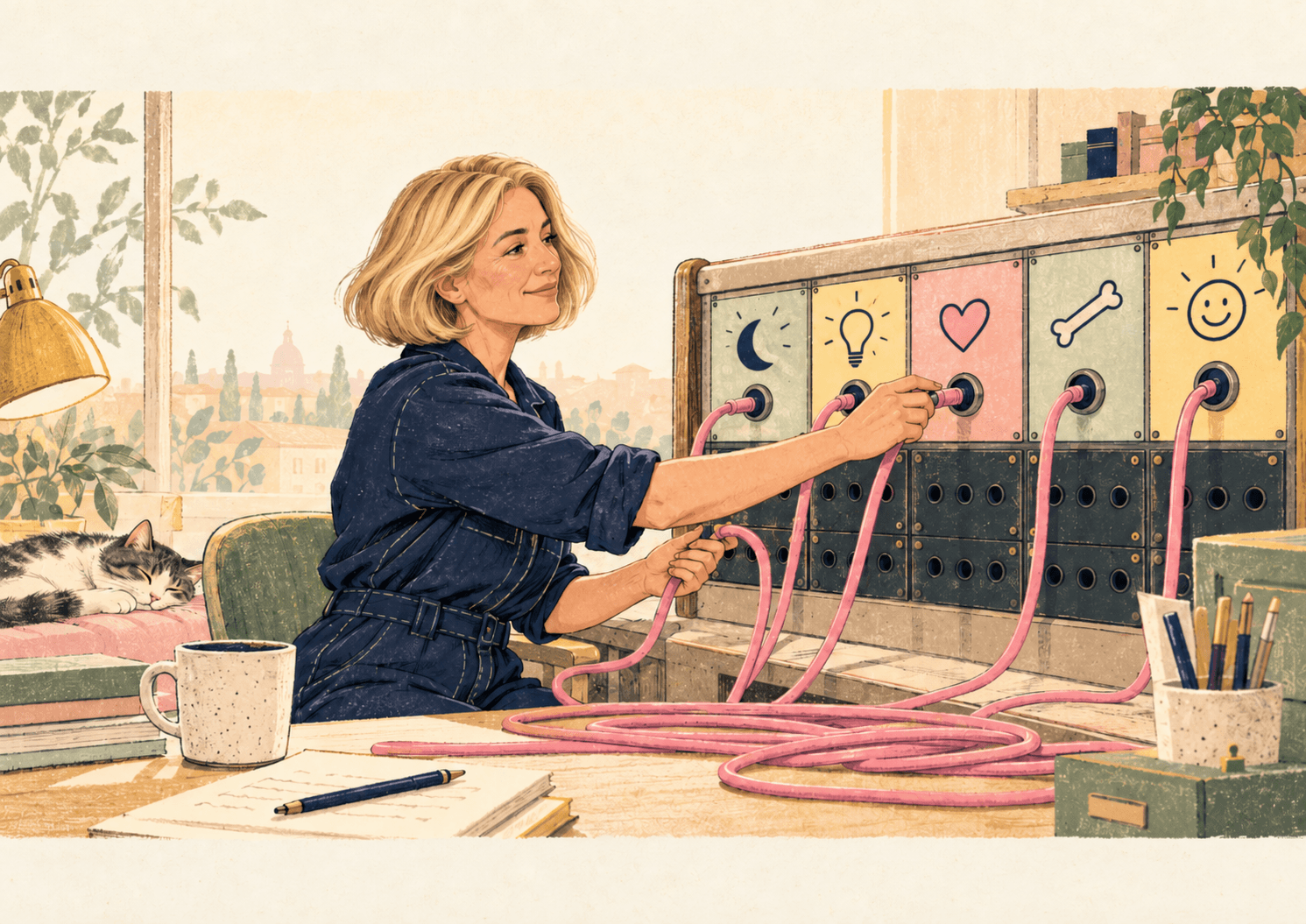
Hot flushes alongside joint pain, mood changes, brain fog and skin that seems to have forgotten how to stay hydrated make for a baffling mix, and falling oestrogen is a big part of the explanation. The body has oestrogen receptors in almost every major organ system, from the brain and heart to the bones, skin and gut. When levels fall around menopause, the effects can turn up almost anywhere.
Oestrogen runs your menstrual cycle, and it is also a systemic hormone that has been doing several jobs at once, for decades, without you having to think about it. For a wider view of how it works alongside your other hormones, see your hormones explained.
What are the different types of oestrogen?
Your body makes three main types. Oestradiol (E2) is the most potent and biologically active form, produced mainly by the ovaries during your reproductive years. It drives the menstrual cycle, supports bone density, protects the cardiovascular system and underpins brain function.
Oestradiol is the form that falls at menopause, and the one a hormone test for this stage of life measures.
Oestrone (E1) is a weaker form that becomes the main oestrogen after menopause. Your body makes it mostly by converting androgens in fat tissue. Oestriol (E3) appears in significant amounts only during pregnancy.
When you read about oestrogen in relation to menopause or HRT, the writer almost always means oestradiol.
What does oestrogen do in the brain?
Oestrogen helps regulate serotonin, dopamine and noradrenaline, the chemical messengers behind mood, focus, memory and your response to stress. It also supports the hippocampus, the part of the brain most important for forming memories. As oestrogen swings or falls, the chemistry of the brain can become less stable.
Research points to a physical basis in these shifts for many of the mood changes and thinking difficulties of perimenopause, which is worth holding on to if anyone has suggested they are all in your head.
How does oestrogen protect the heart?
In the cardiovascular system, oestrogen helps keep artery walls flexible, supports the widening of blood vessels and helps maintain a healthier cholesterol balance. Premenopausal women have much lower rates of cardiovascular disease than men of the same age, and that protection fades after menopause. Our guide to menopause and heart health covers what changes and why it matters.
What does oestrogen do for bones and skin?
In your skeleton, oestrogen acts as a brake on osteoclasts, the cells that break down bone. Once that brake comes off, bone is broken down faster. In the large US SWAN study, women lost around 10% of the bone density in their spine over the ten years around their final period, and our guide to osteoporosis and menopause explains what that means over time.
In your skin, oestrogen drives the production of collagen and hyaluronic acid. Skin loses around 30% of its collagen in the first five years after menopause, which helps explain why skin changes can feel so sudden.
Oestrogen also maintains the thickness, elasticity and lubrication of vaginal and urethral tissue. In the gut, it influences how food moves through and which bacteria make up the microbiome. The list goes on across almost every system in the body.
What happens when oestrogen levels drop?
The effects of falling oestrogen come in two waves. The first arrives during the transition and the early post-menopausal years, bringing hot flushes and night sweats, sleep disruption, mood changes, brain fog and genitourinary changes. The second builds over the years that follow, with rising cardiovascular risk, loss of bone density and a metabolic shift towards insulin resistance.
These changes follow from losing a hormone that had been maintaining so many systems at once. Seeing them in that light makes them easier to take seriously, and good information and care can make a meaningful difference, with a GP or menopause specialist as the person to talk through what fits you.
Oestradiol sits at the centre of this picture, and seeing how your own levels move over time tells you more than a single reading can. You can see which markers we include on what we test.
Questions women ask
What does oestrogen do in a woman's body?
Oestrogen acts on receptors in almost every major organ system. It drives the menstrual cycle and supports bone density, heart health, mood and memory, skin collagen, and the health of vaginal and urinary tissue.
What happens when oestrogen is low after menopause?
In the short term, falling oestrogen can bring hot flushes, night sweats, poor sleep, mood changes, brain fog and genitourinary changes. Over the longer term, cardiovascular risk rises, bone density falls and the body shifts towards insulin resistance.
Which oestrogen does a blood test measure?
Menopause-related hormone tests measure oestradiol (E2), the most active form and the one that falls at menopause. After menopause oestrone (E1) becomes the main oestrogen, made mostly from androgens in fat tissue.
References
Gruber CJ, et al. (2002). Production and actions of estrogens. New England Journal of Medicine, 346(5): 340–352.
Mendelsohn ME & Karas RH. (1999). The protective effects of estrogen on the cardiovascular system. NEJM, 340(23): 1801–1811.
Thornton MJ. (2013). Estrogens and aging skin. Dermato-Endocrinology, 5(2): 264–270.
Greendale GA, et al. (2012). Bone mineral density loss in relation to the final menstrual period in a multiethnic cohort: results from the Study of Women's Health Across the Nation (SWAN). Journal of Bone and Mineral Research, 27(1): 111–118.
Ready to know your normal?
Choose your testKeep reading.
 Foundations
Menopause Symptoms: The Full List
From brain fog and joint pain to palpitations and dry skin, the full list of menopause symptoms, including the ones most women are never told about.
3 min read
 Hormones
Stress and Menopause: Cortisol, Your Hormones and What Helps
Why stress can feel harder in perimenopause, how cortisol and oestrogen interact, and the approaches with evidence behind them for feeling steadier.
6 min read
 Treatment
How to Talk to Your GP About Menopause (Including What to Say If You Get Dismissed)
What to bring, what to ask for and what to say if you feel dismissed. A practical guide to getting more from a GP appointment about perimenopause.
4 min read