Mood Changes in Perimenopause: Anxiety, Low Mood, and Your Hormones
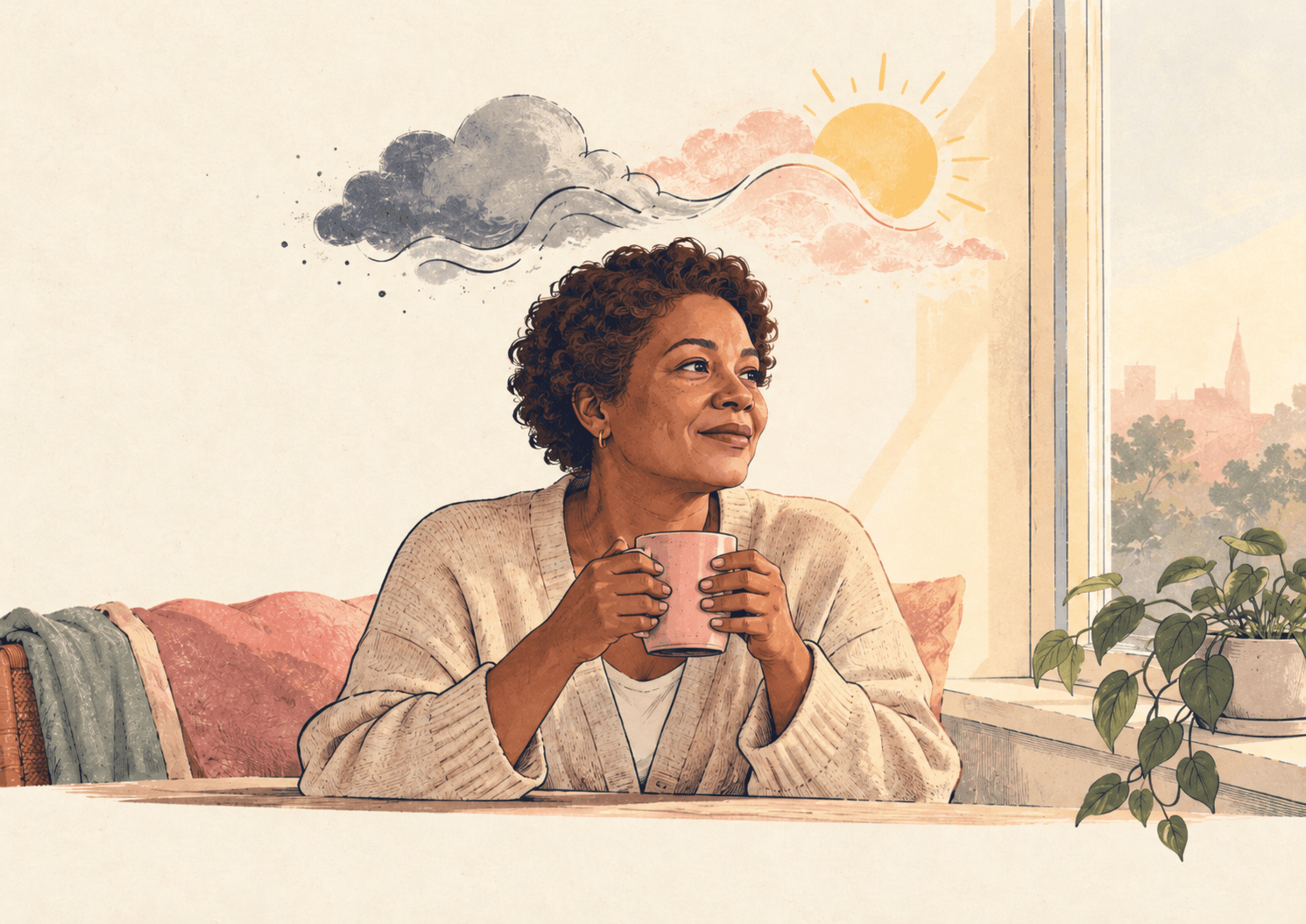
Anxiety, low mood and irritability can all be part of perimenopause, and research has traced a clear hormonal thread through them. Fluctuating oestrogen affects the brain chemicals that keep mood steady, which helps explain why many women feel anxious or low for the first time during perimenopause. None of this is a failure to cope, and several forms of support have good evidence behind them.
Perimenopausal mood changes tend to get blamed on everything except hormones. Life stress, the demands of midlife, a difficult relationship and plain exhaustion all come up first.
For many women, perimenopause brings their first experience of significant anxiety or low mood, and the hormonal link is not always made straight away. That can leave a woman feeling that something is psychologically wrong with her, when hormones may be part of a picture that is explainable and has options.
How does oestrogen affect mood?
Oestrogen has a powerful influence on the brain chemistry that regulates mood. It supports the production and activity of serotonin, the chemical messenger most closely linked to a steady mood, and of dopamine, which drives motivation and a sense of engagement with life.
It acts on GABA receptors, which have a calming, anti-anxiety effect. It also supports the prefrontal cortex, the part of the brain responsible for regulating emotion.
During perimenopause oestrogen can swing sharply up and down, and each of these systems becomes less stable as a result. Serotonin signalling wobbles, dopamine availability shifts and the calming effect of GABA weakens. Women describe moods that feel unpredictable, anxiety that shows up in the body more than in the thoughts, or irritability that arrives faster and fades more slowly than it used to.
That direct action on the brain chemistry of mood is part of what researchers think sets perimenopausal changes apart from an ordinary response to stress, although in real life the two often overlap. Understanding the hormonal side helps you and your doctor think about which kinds of support are most likely to help.
Who is more likely to have mood changes in perimenopause?
Research has found that women with a history of premenstrual syndrome (PMS) or premenstrual dysphoric disorder (PMDD) face a significantly higher risk of mood disturbance during perimenopause. The common thread appears to be a greater sensitivity in the brain to hormonal change. Women who have had postnatal depression also seem to face a higher risk.
Researchers see these links as part of a pattern of sensitivity to hormonal change that can run through a woman's whole reproductive life. If any of this sounds familiar, it is useful to mention your history to your GP.
Mood can also be tangled up with other symptoms. Poor sleep and brain fog often travel alongside anxiety, and our guides to brain fog in menopause and progesterone in perimenopause explore those links.
What support is available for perimenopausal anxiety and low mood?
Several options have evidence behind them, and the right mix depends on your symptoms, your history and your preferences. Your GP or a menopause specialist can talk them through with you. Our guide to talking to your GP about menopause has tips for getting the most from that appointment.
HRT. Oestrogen-based HRT has a good evidence base for improving mood symptoms in perimenopausal women, with the effect appearing strongest during the active transition. For women whose main symptoms are anxiety and poor sleep, micronised progesterone taken at night may bring an additional benefit through its calming effect on GABA. Our guide to what HRT is sets out the benefits and risks.
CBT. Cognitive behavioural therapy adapted for menopause has strong evidence for mood symptoms as well as hot flushes and night sweats. You can read more in our guide to CBT for menopause.
Exercise. Exercise has strong evidence across a range of mood and anxiety outcomes.
Mental health support. When anxiety or low mood feels severe or persistent, an assessment by a mental health professional is appropriate, ideally with someone who understands the hormonal context.
Mood symptoms can be hard to pin down in a ten-minute appointment. Keeping a record of how you feel, alongside a view of how your own hormones change over time, can help you and your GP see the pattern, and what we test explains how we help you build a picture of your own normal.
If low mood feels heavy, lasts for weeks or comes with thoughts of harming yourself, please talk to your GP, call NHS 111, or contact Samaritans at any time, day or night, on 116 123.
Questions women ask
Can perimenopause cause anxiety?
Anxiety can be part of perimenopause. Oestrogen supports serotonin, dopamine and the calming GABA system, and as it fluctuates these systems become less stable. For many women, perimenopause brings their first experience of significant anxiety.
Why do I feel so irritable in perimenopause?
Research links sharp swings in oestrogen with changes in the brain chemistry that keeps mood steady, including serotonin and GABA. Many women describe irritability that arrives faster and fades more slowly than it used to, although irritability has plenty of other possible causes too.
Am I more likely to get perimenopause depression if I had PMS or postnatal depression?
Research has found that women with a history of PMS or PMDD face a significantly higher risk of mood disturbance during perimenopause, and women who have had postnatal depression also appear to face a higher risk. The common thread seems to be a greater sensitivity to hormonal change, so it is worth telling your GP about that history.
References
Soares CN. (2014). Depression and menopause. Psychiatric Clinics of North America, 37(2): 185–196.
Freeman EW, et al. (2006). Associations of hormones and menopausal status with depressed mood. Archives of General Psychiatry, 63(4): 375–382.
NICE. (2019). Menopause: diagnosis and management. Guideline NG23.
Ready to know your normal?
Choose your testKeep reading.
 Symptoms
Brain Fog in Menopause: What Is Happening in Your Brain
Losing words and your train of thought is common in perimenopause. What oestrogen does in the brain, the role of sleep, and what the research shows.
2 min read
 Treatment
What Is HRT? A Clear, Balanced Guide
What hormone replacement therapy is, how it works, the different types, and a balanced look at benefits and risks so you can make an informed choice.
4 min read
 Foundations
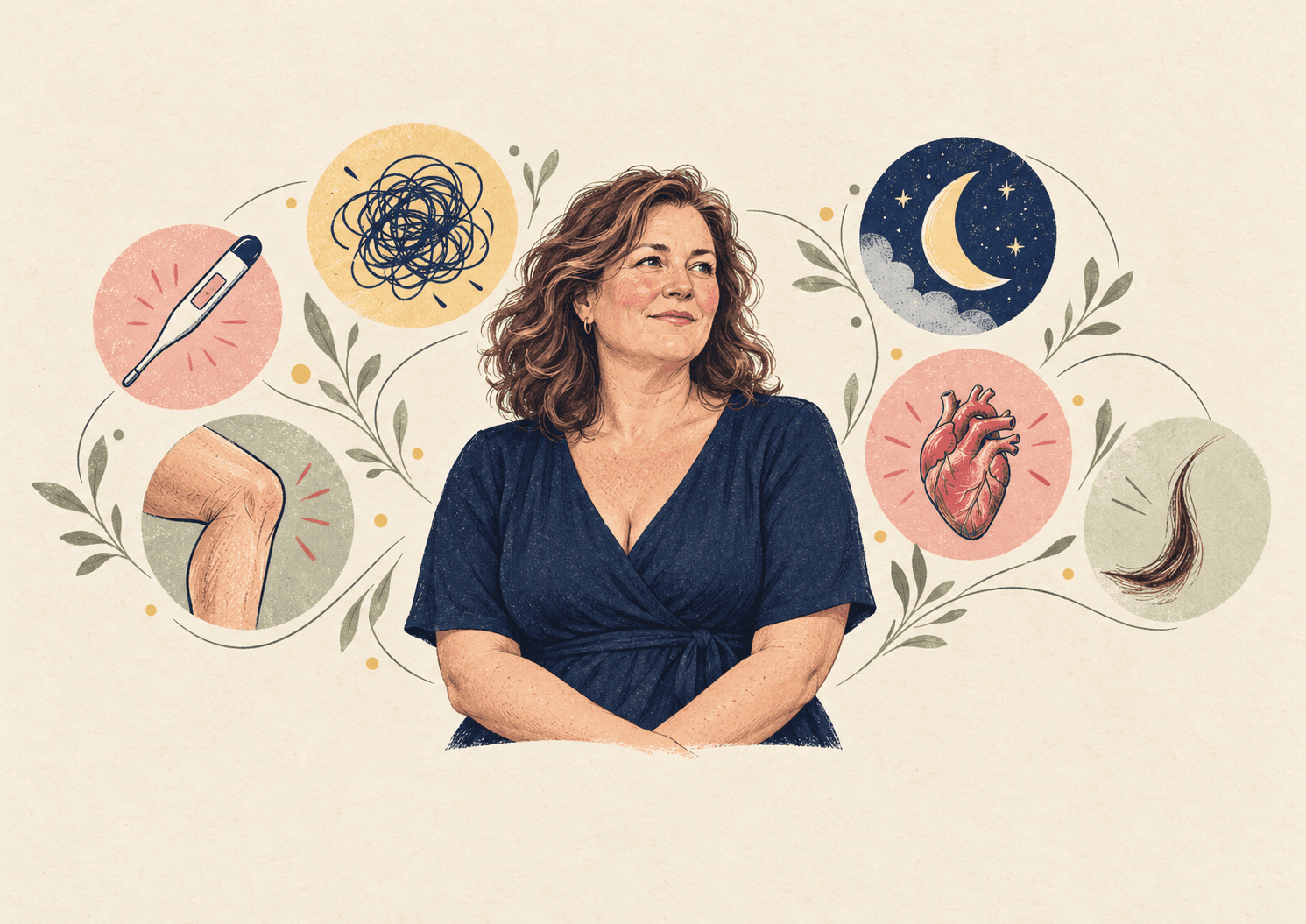
Menopause Symptoms: The Full List
From brain fog and joint pain to palpitations and dry skin, the full list of menopause symptoms, including the ones most women are never told about.
3 min read