What Is HRT? A Clear, Balanced Guide

Mention HRT at a dinner table and you are likely to hear several conflicting stories, often all at once. HRT, or hormone replacement therapy, is a treatment that replaces the hormones the ovaries make less of during and after menopause, mainly oestrogen, with progesterone usually given alongside it for women who still have a uterus. It is one of the main medical treatments for menopause symptoms, and whether it suits you depends on your own health, history and preferences.
The clearer your picture of the evidence, the easier it becomes to talk it through with your GP or menopause specialist.
Why is HRT so confusing?
Few medical treatments have had a more complicated public history. HRT was celebrated in the 1990s, feared after 2002 and gradually reassessed over the two decades since. Much of the confusion traces back to one large trial, the Women's Health Initiative, which we explain in our guide to the 2002 HRT study. Researchers have learned a great deal since then, and the evidence now gives a more detailed and more individual picture of benefits and risks.
What is HRT and how does it work?
HRT supplies hormones, principally oestrogen, to replace those the ovaries no longer produce in the same amounts during and after menopause. The aim is to bring hormone levels closer to the premenopausal range. That can ease the symptoms of hormone loss and may restore some of the effects oestrogen used to have on the heart, bones, brain and other tissues.
Oestrogen does the main work. Women who still have a uterus are usually also prescribed progesterone or a progestogen, because oestrogen on its own causes the lining of the uterus to thicken over time. Women who have had a hysterectomy can usually take oestrogen alone, which has a different and generally more favourable risk profile.
What is body-identical HRT?
Much of the HRT prescribed in the UK today uses body-identical hormones. These are molecules with the same structure as the hormones your body makes. For oestrogen, that means oestradiol, which comes as a patch, gel or spray absorbed through the skin, or as a tablet taken by mouth. For the progestogen part, it means micronised progesterone, available in the UK as Utrogestan.
These hormones differ from the older synthetic formulations used in the 2002 Women's Health Initiative trial. The difference between older synthetic HRT and modern body-identical HRT is one of the main reasons the evidence looks different today from how it looked in 2002. You can compare the options in our guides to types of HRT and body-identical and bioidentical HRT.
What are the benefits of HRT?
The evidence on symptom relief is strong. A Cochrane review found HRT cuts the frequency of hot flushes by around 75%, and studies show improvements in sleep quality, mood, cognitive function, energy and genitourinary symptoms such as vaginal dryness.
HRT also has evidence for protecting bone. It is one of the most effective treatments for preventing bone loss after menopause, which you can read about in our guide to osteoporosis after menopause. For the heart, evidence suggests that starting HRT earlier may bring a benefit, or at least no added cardiovascular risk. Research on long-term brain health is still emerging, with some studies pointing to a possible benefit, and our guide to menopause and dementia risk sets out where that research stands.
What are the risks of HRT?
The breast cancer risk linked to combined HRT using oestrogen and micronised progesterone is small. The best current estimate puts the added breast cancer risk from five years of combined HRT at roughly the same level as the risk linked to drinking one alcoholic drink a day. For oestrogen-only HRT, used by women without a uterus, most analyses have found no statistically significant increase in breast cancer risk.
The risk of blood clots, known as thromboembolism, is associated with oestrogen taken by mouth. Transdermal oestrogen, absorbed through the skin, bypasses the liver and has not shown the same association. This is one of the main reasons current guidelines point towards transdermal delivery.
Your own balance of benefit and risk depends on factors such as your age, your health history and the type of HRT involved, so the numbers above are a starting point for a conversation with your doctor.
Is HRT right for me?
That decision belongs to you, made with your GP or menopause specialist after an individual assessment of your risks and benefits. Some women choose HRT, some prefer other routes and some cannot take it for medical reasons. Our guide to non-hormonal menopause treatments covers the alternatives, and how to talk to your GP about menopause can help you prepare for the appointment.
Questions women ask
What does HRT do?
HRT replaces the hormones the ovaries make less of during and after menopause, mainly oestrogen, with progesterone usually added for women who have a uterus. It can reduce hot flush frequency by around 75% and improve sleep, mood and genitourinary symptoms. It is also one of the most effective treatments for preventing bone loss after menopause.
Does HRT cause breast cancer?
The breast cancer risk from combined HRT with oestrogen and micronised progesterone is small. The best current estimate compares five years of combined HRT to drinking one alcoholic drink a day. Most analyses of oestrogen-only HRT have found no statistically significant increase, and your GP or menopause specialist can talk through your own risk.
Do HRT patches carry a blood clot risk?
The blood clot risk linked to HRT is associated with oral oestrogen. Patches, gels and sprays deliver oestrogen through the skin, bypassing the liver, and have not shown the same association. This is one of the main reasons current guidelines point towards transdermal delivery.
References
NICE. (2019). Menopause: diagnosis and management. Guideline NG23.
Collaborative Group on Hormonal Factors in Breast Cancer. (2019). Type and timing of menopausal hormone therapy and breast cancer risk. Lancet, 394(10204): 1159–1168.
Canonico M, et al. (2007). Hormone therapy and venous thromboembolism. Circulation, 115(7): 840–845.
MacLennan AH, et al. (2004). Oral oestrogen and combined oestrogen/progestogen therapy versus placebo for hot flushes. Cochrane Database of Systematic Reviews, (4): CD002978.
Ready to know your normal?
Choose your testKeep reading.
 Treatment
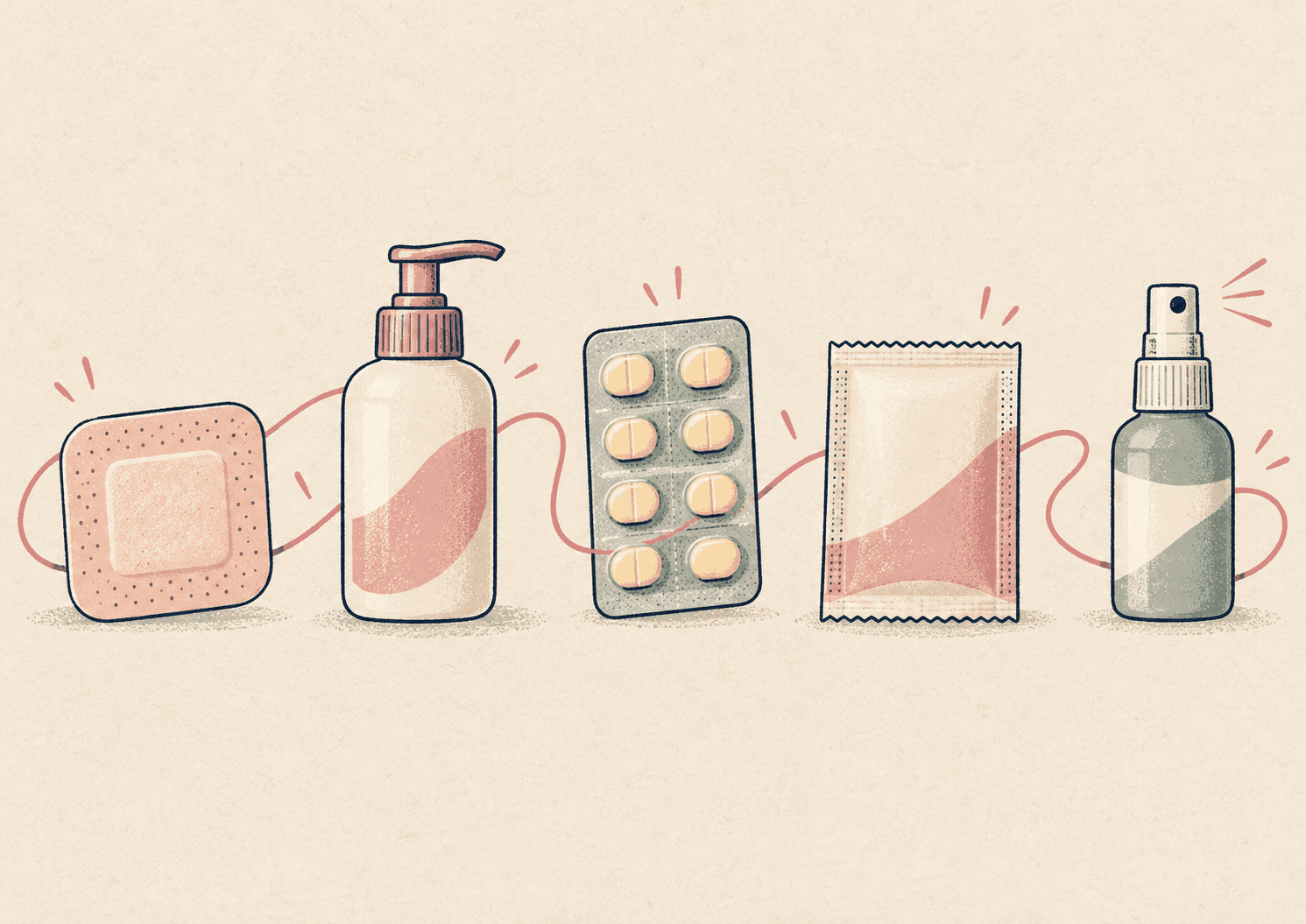
Types of HRT: Patches, Gels, Tablets and Body-Identical Options
Patches, gels, tablets, sprays and vaginal oestrogen explained, plus the difference between regulated body-identical and compounded bioidentical hormones.
2 min read
 Treatment
How to Talk to Your GP About Menopause (Including What to Say If You Get Dismissed)
What to bring, what to ask for and what to say if you feel dismissed. A practical guide to getting more from a GP appointment about perimenopause.
4 min read
 Foundations
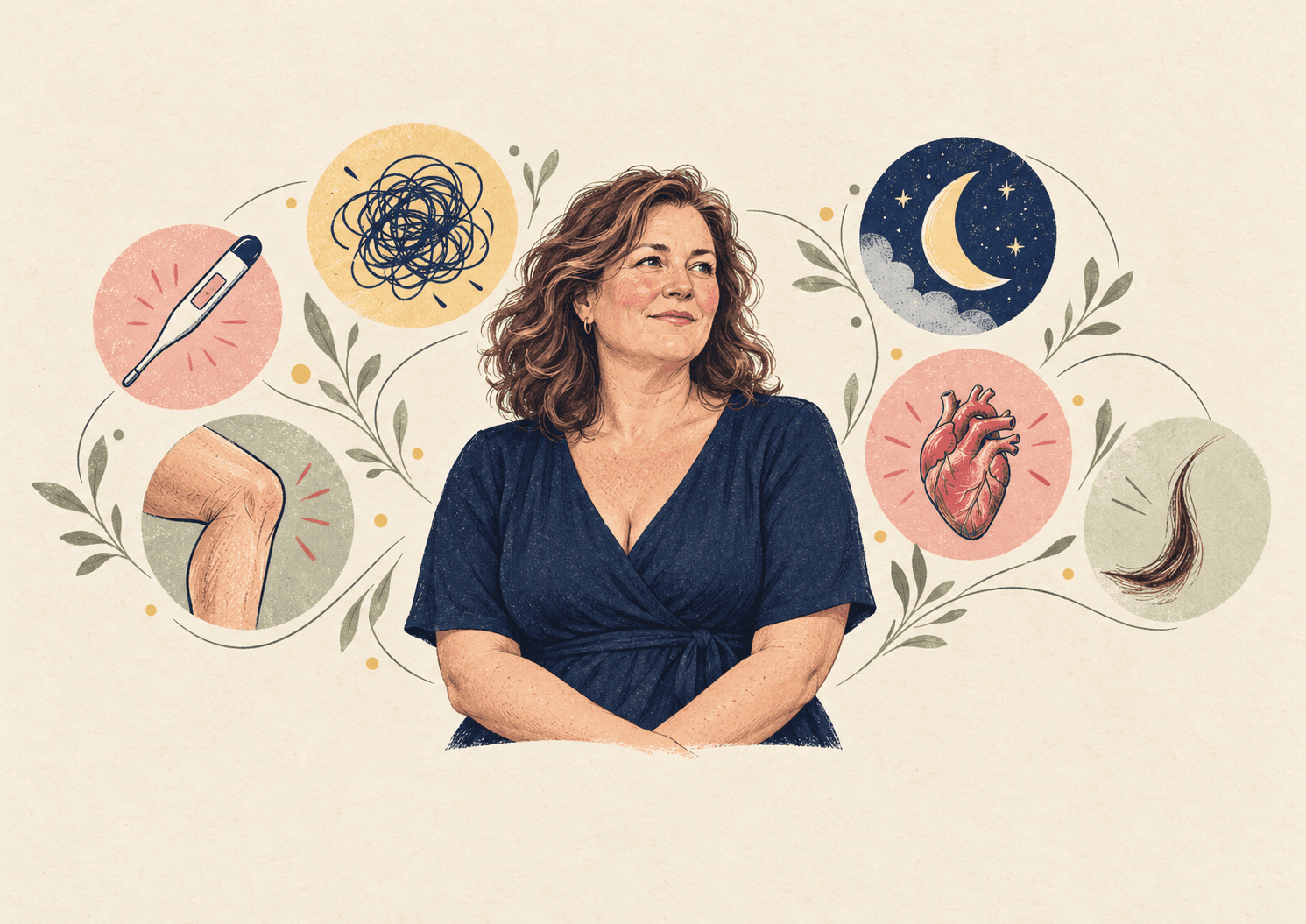
Menopause Symptoms: The Full List
From brain fog and joint pain to palpitations and dry skin, the full list of menopause symptoms, including the ones most women are never told about.
3 min read