Heart Palpitations in Menopause: Why They Happen and When to Get Checked

A heart that races out of nowhere, flutters in the chest or seems to skip a beat is one of the more unsettling things women describe in perimenopause. Palpitations are a recognised symptom of menopause, in the same family as hot flushes and night sweats, and in most women at this stage they turn out to be harmless. New palpitations still deserve a check with your doctor before anyone puts them down to hormones, and knowing the warning signs helps you judge how soon to book that appointment.
The heart is the last place anyone wants surprises, so it makes sense that this symptom worries women more than most on the list of menopause symptoms.
Why does menopause cause heart palpitations?
Oestrogen has an influence on your autonomic nervous system, the part of your nervous system that runs the body's automatic functions without you thinking about them. That includes the variability of your heart rate and the balance between the sympathetic system, which revs you up, and the parasympathetic system, which calms you down.
As oestrogen fluctuates and falls, that regulation becomes less smooth. Your heart responds more readily to small changes, and you become more aware of beats you would once have ignored.
Are palpitations linked to hot flushes?
Often, yes. During a hot flush the blood vessels near your skin widen and your sympathetic nervous system fires up. That combination can bring on a brief rise in heart rate. Some women feel the racing heart and the heat at the same moment, while others notice the palpitation in the moments before the flush arrives. Our guide to hot flushes explains what happens in the body during a flush.
When should you see a doctor about palpitations?
Any new palpitations are worth mentioning to your GP. The usual first checks are a resting ECG, a blood pressure reading and blood tests that include thyroid function. An overactive thyroid is a common cause of palpitations and shares many symptoms with perimenopause, which is one reason doctors look at it. You can read more about that overlap in our guide to thyroid problems and menopause.
Some palpitations call for more detailed heart tests. See a doctor promptly if your palpitations:
go on for a sustained stretch
come on when you exert yourself
happen alongside chest discomfort or breathlessness
make you feel faint or close to passing out
What helps menopause palpitations?
Once a doctor has confirmed that your palpitations are vasomotor, meaning part of the hot flush family, a few approaches have evidence behind them. Research suggests HRT is the most effective treatment for reducing how often these palpitations happen. HRT involves weighing benefits and risks for your own health, which makes it a conversation for your GP or menopause specialist.
Lifestyle factors play a part as well. Some women find that cutting back on caffeine and alcohol helps.
Keeping a note of when palpitations happen, and what came before them, gives your GP more to work with. Knowing your own normal over time does the same for your wider health picture, which is the thinking behind the test.
Questions women ask
Can perimenopause cause heart palpitations?
They can. Palpitations are a recognised vasomotor symptom of menopause, in the same family as hot flushes. Oestrogen influences the nervous system that regulates heart rate, and as levels fluctuate and fall that regulation becomes less smooth. New palpitations should still be checked by a doctor.
When are heart palpitations serious?
See a doctor promptly if palpitations are sustained, come on with exertion, happen with chest discomfort or breathlessness, or make you feel faint. These signs call for more detailed heart tests. Any new palpitations are worth raising with your GP.
Can hot flushes make your heart race?
They can. The widening of blood vessels and the burst of nervous system activity behind a hot flush can cause a brief rise in heart rate. Some women feel both at once, and some notice the palpitation shortly before the heat.
References
NICE. (2015, updated 2024). Menopause: identification and management. Guideline NG23.
Rosano GMC, et al. (1997). Palpitations: what is the mechanism, and when should we treat them? International Journal of Fertility and Women's Medicine, 42(2): 94–100.
Ready to thrive in midlife?
Book my testKeep reading.
 Foundations
Menopause Symptoms: The Full List
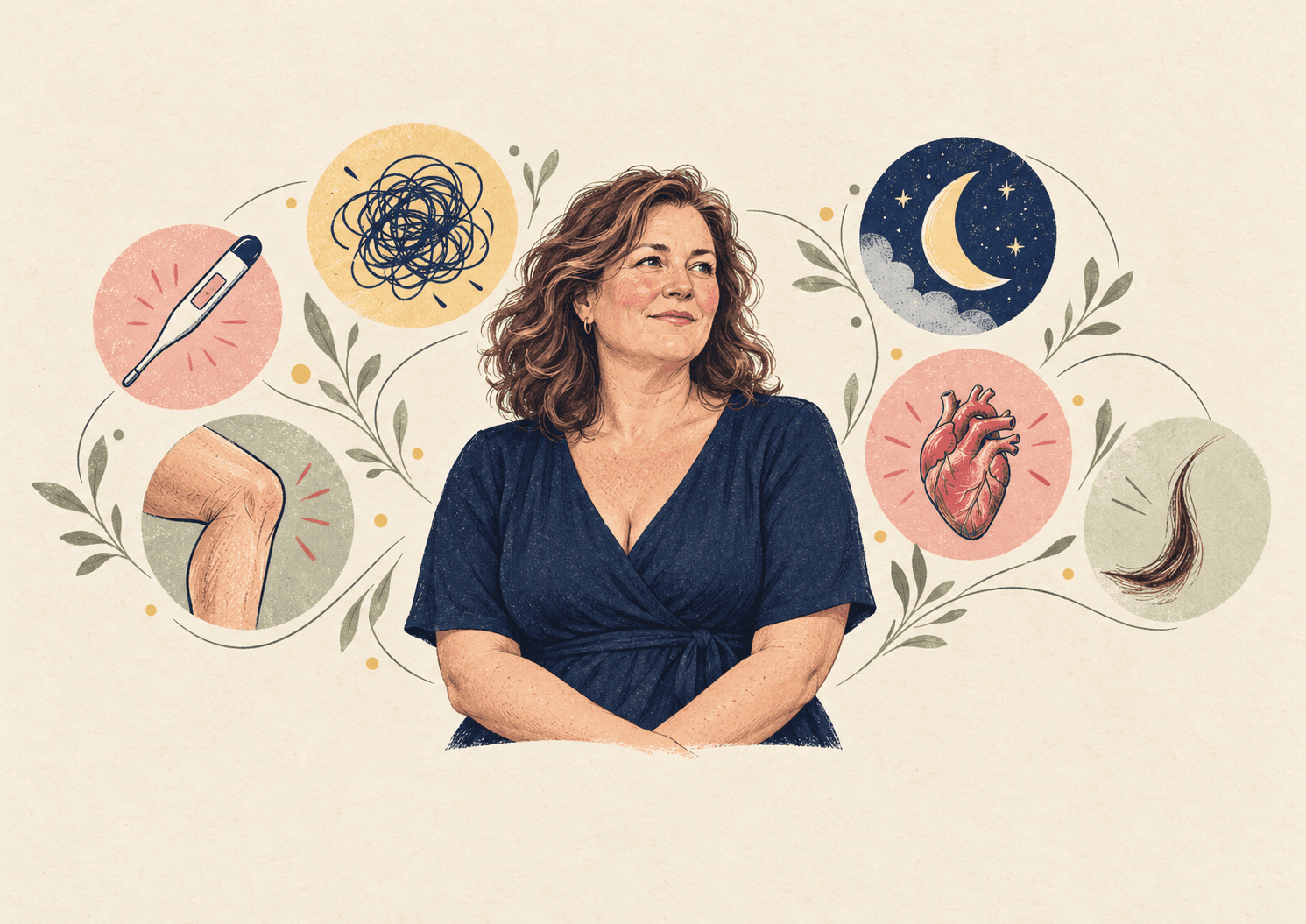
From brain fog and joint pain to palpitations and dry skin, the full list of menopause symptoms, including the ones most women are never told about.
3 min read
 Symptoms
Hot Flushes: Why They Happen and What You Can Do About Them
What happens in your body during a hot flush, the common triggers, and the options the evidence supports, from lifestyle changes to medical treatment.
4 min read
 Hormones
Your Thyroid and Menopause: Why They Get Confused All the Time
Thyroid problems and perimenopause share many symptoms and often appear in midlife. Where they overlap, where they differ and why checking both helps.
4 min read