Menopause and Migraines: The Hormonal Headache Connection

Migraines that once kept to a polite monthly schedule can start turning up whenever they like in your 40s, and perimenopause is often part of the story. For women who have always had migraines, the transition often makes them more frequent and harder to predict for a while. The better news is that many women find their attacks ease or stop altogether once they are through menopause.
The link between female hormones and migraine is one of the most consistent findings in headache medicine. Women are approximately three times more likely than men to have migraines. The gap opens after puberty and largely closes after menopause, a pattern that points firmly at oestrogen. Headaches and migraines appear on our full list of menopause symptoms for that reason.
Why are migraines linked to oestrogen?
The trigger is the change in oestrogen more than the level itself. Many women with migraine know the attack that arrives shortly before a period. That timing lines up with the drop in oestrogen at the end of the menstrual cycle, and doctors call this menstrually related migraine.
Oestrogen also affects the chemistry of migraine in the brain. It influences how your body handles serotonin, and low serotonin is closely associated with migraine. It affects the expression of CGRP (calcitonin gene-related peptide), a key driver of migraine pain in the trigeminovascular system, the network of nerves and blood vessels involved in a migraine attack.
Why do migraines get worse in perimenopause?
During perimenopause oestrogen does more than decline. It rises and falls unpredictably. For women whose migraines are sensitive to oestrogen withdrawal, those erratic swings can mean the trigger fires more often and with less warning than it did during a regular monthly cycle. Migraines can become more frequent, more severe and harder to anticipate during the transition, which is wearing for anyone who used to be able to plan around them.
Do migraines stop after menopause?
For many women they improve. Once oestrogen settles at a steady low level after menopause, the withdrawal trigger stops occurring. Many women with a history of menstrual migraine find their attacks reduce substantially or stop in the post-menopausal years. The wait can feel very long while you are in the middle of it.
Can you take HRT if you get migraines?
Migraine, including migraine with aura, does not rule out HRT. Some of the confusion comes from older guidance about the combined contraceptive pill, which people sometimes apply to HRT by mistake.
The route of delivery makes a difference. Oestrogen taken as a tablet produces peaks and troughs in blood levels, and those swings can trigger migraine. Oestrogen absorbed through the skin, from patches, gels or sprays, gives steadier levels, and guidelines consistently favour it over tablets for women with migraine. Our guide to the different types of HRT sets out how each one works.
If you are weighing up HRT, your migraine history is useful information to bring to your GP or menopause specialist, so the two of you can look at the options with it in mind.
Questions women ask
Can perimenopause make migraines worse?
Yes, for many women with a history of migraine. Oestrogen rises and falls unpredictably in perimenopause, and falling oestrogen is a trigger for migraine in susceptible women. Attacks can become more frequent, more severe and harder to predict during the transition.
Do migraines go away after menopause?
Many women with a history of menstrual migraine find their attacks reduce substantially or stop after menopause. Once oestrogen settles at a steady low level, the withdrawal trigger no longer occurs. Women are approximately three times more likely than men to have migraines, and the gap largely closes after menopause.
Is HRT safe if you get migraines with aura?
HRT is not ruled out for women with migraine, including migraine with aura. Older guidance about the combined pill is sometimes applied to HRT by mistake. Guidelines favour oestrogen through the skin, such as patches, gels or sprays, over tablets because it gives steadier levels, and your GP or menopause specialist can talk through what suits you.
References
MacGregor EA. (2013). Migraine, menopause and hormone replacement therapy. Post Reproductive Health, 19(4): 12–18.
NICE. (2015, updated 2024). Menopause: identification and management. Guideline NG23.
British Association for the Study of Headache. (2022). Guidelines for the management of migraine in primary care. bash.org.uk
Ready to thrive in midlife?
Book my testKeep reading.
 Foundations
Menopause Symptoms: The Full List
From brain fog and joint pain to palpitations and dry skin, the full list of menopause symptoms, including the ones most women are never told about.
3 min read
 Treatment
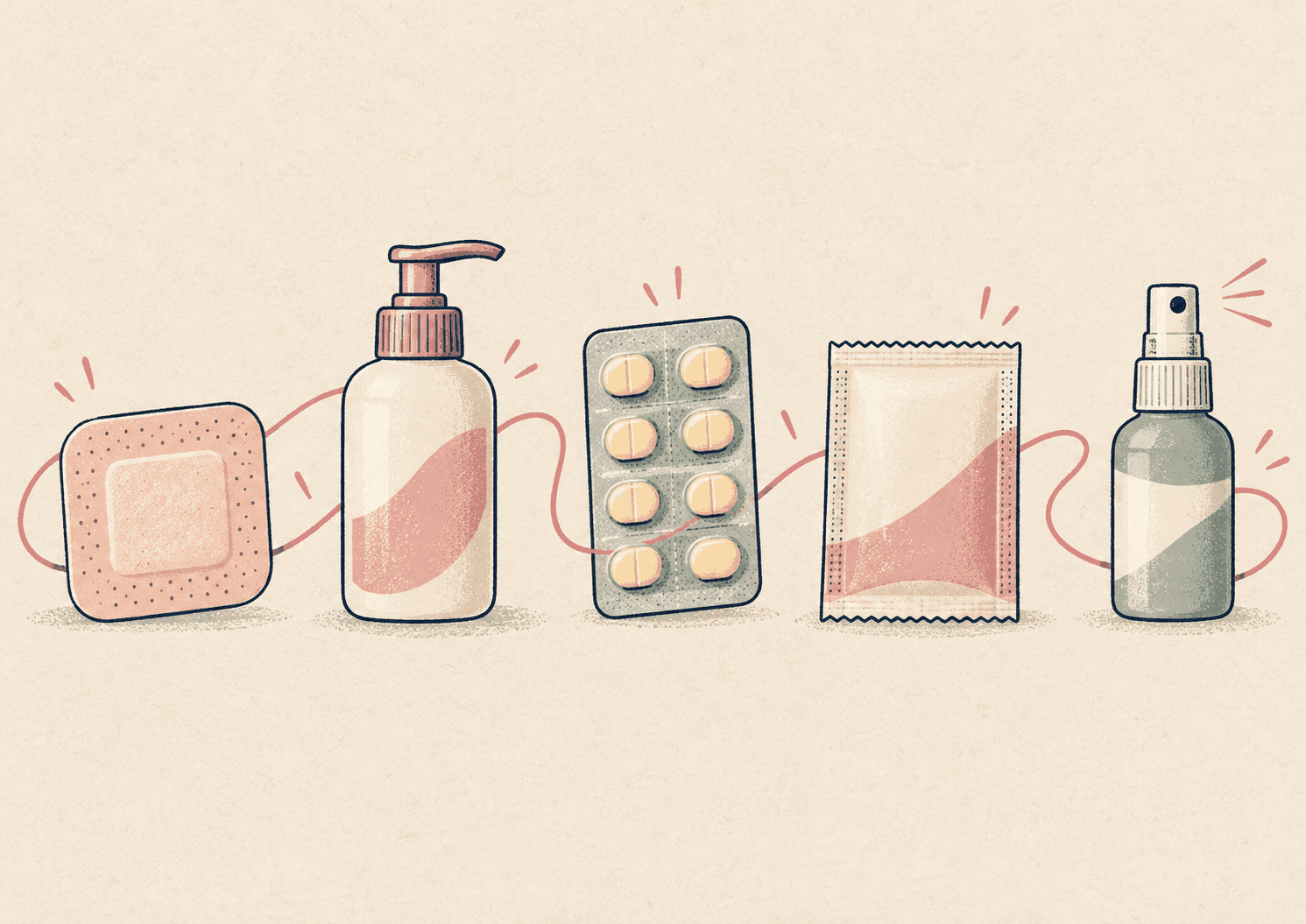
Types of HRT: Patches, Gels, Tablets and Body-Identical Options
Patches, gels, tablets, sprays and vaginal oestrogen explained, plus the difference between regulated body-identical and compounded bioidentical hormones.
6 min read
 Hormones
Stress and Menopause: Cortisol, Your Hormones and What Helps
Why stress can feel harder in perimenopause, how cortisol and oestrogen interact, and the approaches with evidence behind them for feeling steadier.
6 min read