Osteoporosis After Menopause: What Happens to Your Bones and What Helps
Bone loss is the one menopause change nobody feels happening. Menopause speeds it up, and for most women the fastest loss of their lives comes in the five to ten years around it, long before old age. Osteoporosis causes no symptoms until a bone breaks, which is why so many women first hear the word in a fracture clinic.
The encouraging part is that those same years around menopause are when prevention makes the most difference, so knowing about it early puts you in a stronger position.
Why does menopause cause bone loss?
Bone is living tissue, and your body rebuilds it all the time. Cells called osteoclasts break down old bone while osteoblasts lay down new bone, and for most of your adult life the two stay close to balance. Oestrogen keeps the osteoclasts in check. When oestrogen falls at menopause, that brake comes off, osteoclast activity speeds up and you start to lose bone faster than you can replace it.
That loss adds up quickly. Women can lose up to 20% of their bone density in the five to seven years after menopause. In the UK, one in two women over 50 will have a fracture linked to osteoporosis in her lifetime. The wrist, spine and hip are the usual sites, and these breaks bring pain and disability. A hip fracture in an older woman also carries a significant risk of death.
Am I at risk of osteoporosis?
Some women start from a lower base or lose bone faster than others. The recognised risk factors include:
early menopause or premature ovarian insufficiency (POI), which means more years without oestrogen
a family history of osteoporosis or fragility fracture
low body weight
smoking and high alcohol intake
long-term use of corticosteroids
conditions that affect how well you absorb nutrients
How is bone density measured?
A DEXA scan measures bone density and gives a T-score, which compares the result with that of a healthy young adult. Under the standard definitions clinicians use, a T-score below -1 is classed as osteopenia, a milder loss of density, and a score below -2.5 as osteoporosis, with a doctor interpreting the scan alongside your history. Doctors can also use the FRAX tool, which combines bone density with clinical risk factors to estimate the chance of a fracture over the next ten years. If several of the risk factors above apply to you, your GP can talk you through whether an assessment makes sense.
What helps protect your bones after menopause?
The options range from everyday foundations to medical treatment, and many women end up with a mix of both.
Calcium and vitamin D underpin bone health. You can find calcium in dairy, fortified plant milks, tinned sardines and leafy greens. UK public health guidance on vitamin D suggests a supplement of 10 micrograms a day from October to March, and all year round for people at higher risk. Your GP can advise on what fits you. Our guide to nutrition in menopause goes into more detail.
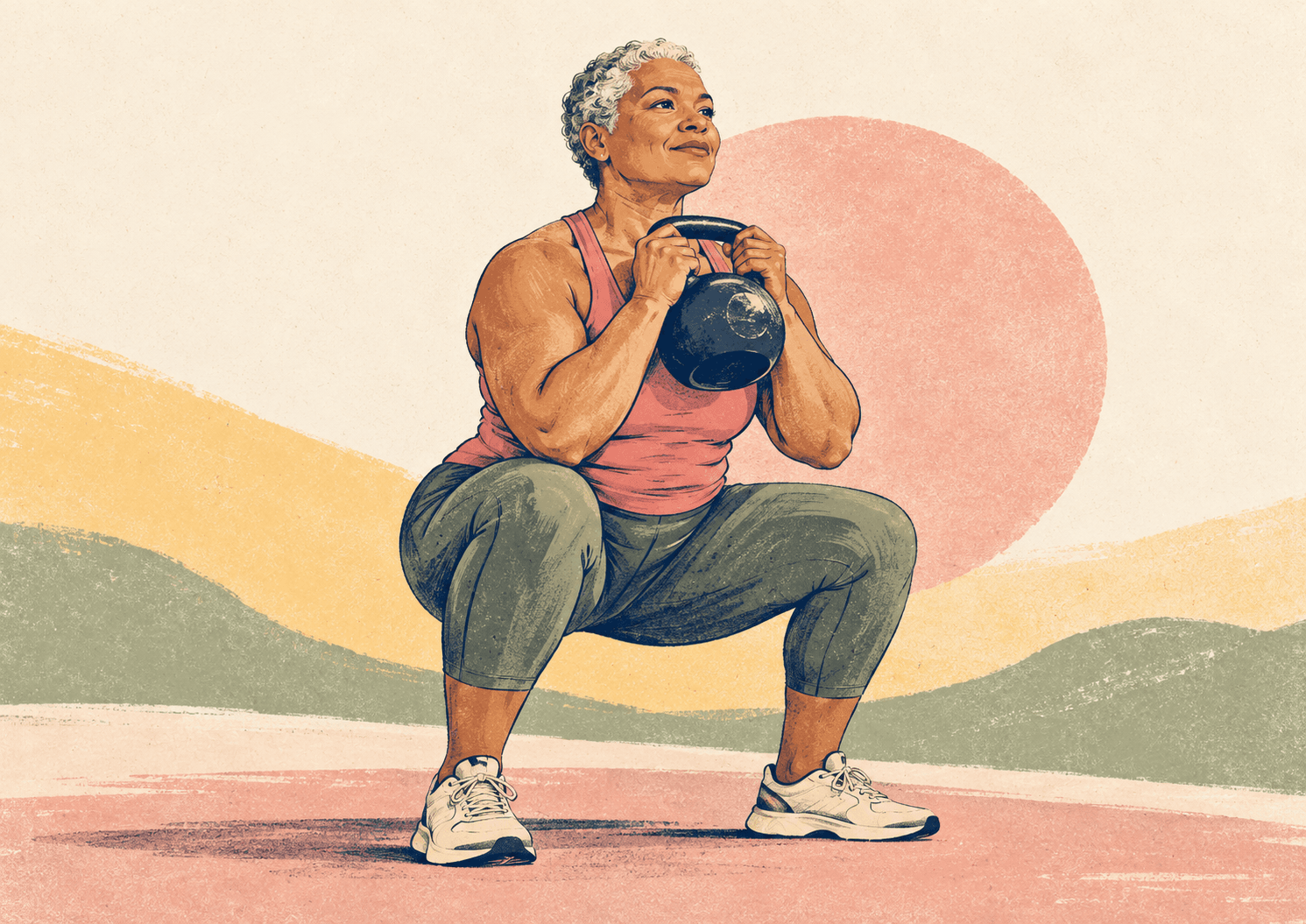
Movement matters too. Weight-bearing and resistance exercise stimulate bone formation, and studies support their role in maintaining bone density. If lifting weights feels unfamiliar, strength training in menopause covers where to begin.
HRT is one of the most effective treatments for preventing bone loss after menopause. It restores oestrogen's brake on osteoclasts, which pauses the accelerated loss for as long as it is taken. NICE guideline NG23 lists HRT as an option for preventing osteoporosis in women at higher risk, and the evidence that it lowers fracture risk is strong. Whether HRT suits you depends on your wider health and history, which makes it a conversation for your GP or menopause specialist. You can read more in what is HRT.
For women who already have osteoporosis, doctors may offer bisphosphonates or other bone-specific medicines alongside lifestyle and hormonal approaches.
Bone loss gives you no warning signs, so it helps to think of midlife health as a picture that changes over time. Knowing your own baseline and watching how it moves gives you and your GP more to work with, which is the thinking behind the test.
Questions women ask
At what age does bone loss speed up in women?
The fastest bone loss of a woman's life happens in the five to ten years around menopause. Falling oestrogen lifts the brake on the cells that break down bone, so it is lost faster than it is replaced. Women can lose up to 20% of their bone density in the five to seven years after menopause.
Can you feel osteoporosis?
Osteoporosis has no symptoms until a bone breaks, most often at the wrist, spine or hip. A DEXA scan measures bone density and gives a T-score, and under the standard definitions a score below -2.5 is classed as osteoporosis. The FRAX tool adds clinical risk factors to estimate ten-year fracture risk, and a doctor interprets both for you.
Does HRT prevent osteoporosis?
HRT is one of the most effective treatments for preventing bone loss after menopause, and it pauses the accelerated loss for as long as it is taken. NICE guideline NG23 lists it as an option for preventing osteoporosis in women at higher risk. Whether it is right for you is a decision to make with your GP or menopause specialist.
References
NHS. Menopause and your bone health.
Royal Osteoporosis Society. (2022). Osteoporosis affects one in two women over 50.
National Osteoporosis Guideline Group (NOGG). (2021). Clinical guideline for the prevention and treatment of osteoporosis. nogg.org.uk
NICE. (2015, updated 2024). Menopause: identification and management. Guideline NG23.
Watson SL, et al. (2018). High-intensity resistance and impact training improves bone mineral density and physical function in postmenopausal women with osteopenia and osteoporosis: the LIFTMOR randomized controlled trial. Journal of Bone and Mineral Research, 33(2): 211–220.
Greendale GA, et al. (2012). Bone mineral density loss in relation to the final menstrual period in a multiethnic cohort: results from the Study of Women's Health Across the Nation (SWAN). Journal of Bone and Mineral Research, 27(1): 111–118.
Ready to thrive in midlife?
Book my testKeep reading.
 Treatment
What Is HRT? A Clear, Balanced Guide
What hormone replacement therapy is, how it works, the different types, and a balanced look at benefits and risks so you can make an informed choice.
4 min read
 Lifestyle
Menopause Nutrition: What to Eat, What to Avoid, and Why It Matters
Protein, calcium, vitamin D and the eating patterns with the strongest evidence. A practical guide to nutrition through perimenopause and menopause.
3 min read
 Lifestyle
Exercise in Menopause: Why Strength Training Matters Now
Resistance training supports muscle, bone and metabolism as oestrogen falls. Why it matters more now, what counts, and where walking and yoga fit in.
4 min read