Vaginal Dryness and GSM: The Menopause Symptom Women Suffer in Silence
Vaginal dryness after menopause is common, rarely talked about, and has a proper medical name along with effective treatments. Doctors call it genitourinary syndrome of menopause, or GSM, and it covers the changes to the vagina, vulva and lower urinary tract that follow a long-term fall in oestrogen. If you have dryness, soreness or new urinary symptoms, you are far from alone, and you have options.
These symptoms are common after menopause, which you would never guess from how seldom anyone talks about them. Many women find the subject hard to raise in a short appointment, and it does not always come up from the other side of the desk either. The silence has a cost, since GSM behaves differently from most menopause symptoms and tends to get worse without treatment.
What is GSM?
Genitourinary syndrome of menopause is the term specialists adopted in 2014 to replace the older labels of vulvovaginal atrophy and atrophic vaginitis. The newer name reflects what women experience, which spans the vagina, the vulva and the bladder and urethra. It sits alongside hot flushes and brain fog on the full list of menopause symptoms.
Why does menopause cause vaginal dryness?
Oestrogen keeps vaginal tissue thick, elastic and naturally lubricated. It also keeps the vagina acidic, typically at a pH of around 4.5, and that acidity helps keep infections at bay.
As oestrogen falls, the vaginal walls grow thinner and less elastic, natural lubrication drops and the pH drifts towards alkaline. Harmful bacteria find an alkaline environment easier to live in. That shift explains why recurrent urinary tract infections and bacterial vaginosis become more common after menopause.
What are the symptoms of GSM?
The symptoms vary from woman to woman. Vaginal changes can include dryness, burning, itching, general discomfort, and pain or bleeding during sex. Urinary changes can include urgency, needing to go more often, and repeated UTIs. Some women notice one or two of these, others several at once. If pain during sex is part of your experience, our guide to menopause and libido looks at how the two connect.
Does vaginal dryness get worse after menopause?
For many women, yes, if nothing is done. Hot flushes and night sweats often ease over the first few years after the transition. GSM follows a different course. Without oestrogen to maintain the tissue, the changes progress, and symptoms that feel mild in the early post-menopausal years tend to worsen over the decade that follows.
What treatments are there for vaginal dryness?
The evidence points to topical vaginal oestrogen as the most effective treatment for GSM. It comes as a cream, a pessary or a ring and works where you apply it, with minimal absorption into the rest of the body. Doctors consider it safe for the majority of women.
In studies, regular use reverses and prevents the tissue changes of GSM, which sets it apart from products that ease symptoms on the surface. Our guide to the different types of HRT explains how local oestrogen differs from HRT that works throughout the body.
Other options exist too. Over-the-counter vaginal moisturisers, used regularly and at times other than sex, can help in milder cases. Lubricants make sex more comfortable, though they leave the underlying tissue changes as they are. Ospemifene is a tablet taken by mouth, an option for women who prefer not to use vaginal preparations.
You do not have to put up with these symptoms. A GP or menopause specialist can talk you through which of these approaches might suit you and your health history.
Questions women ask
Is vaginal dryness normal after menopause?
It is very common. Vaginal dryness is part of genitourinary syndrome of menopause, or GSM. It happens because falling oestrogen leaves vaginal tissue thinner, less elastic and less lubricated.
Is vaginal oestrogen safe?
Vaginal oestrogen works locally, and very little of it is absorbed into the rest of the body. Doctors consider it safe for the majority of women. Your GP or menopause specialist can talk through whether it suits your own health history.
Can menopause cause UTIs?
It can make them more likely. Oestrogen keeps the vagina acidic, at a pH of around 4.5, which helps protect against infection. After menopause the pH shifts towards alkaline, and recurrent urinary tract infections and bacterial vaginosis become more common.
References
Portman DJ & Gass ML. (2014). Genitourinary syndrome of menopause. Menopause, 21(10): 1063–1068.
Nappi RE & Kokot-Kierepa M. (2012). Vaginal Health: Insights, Views and Attitudes (VIVA). Climacteric, 15(1): 36–44.
NICE. (2015, updated 2024). Menopause: identification and management. Guideline NG23.
Ready to thrive in midlife?
Book my testKeep reading.
 Foundations
Menopause Symptoms: The Full List
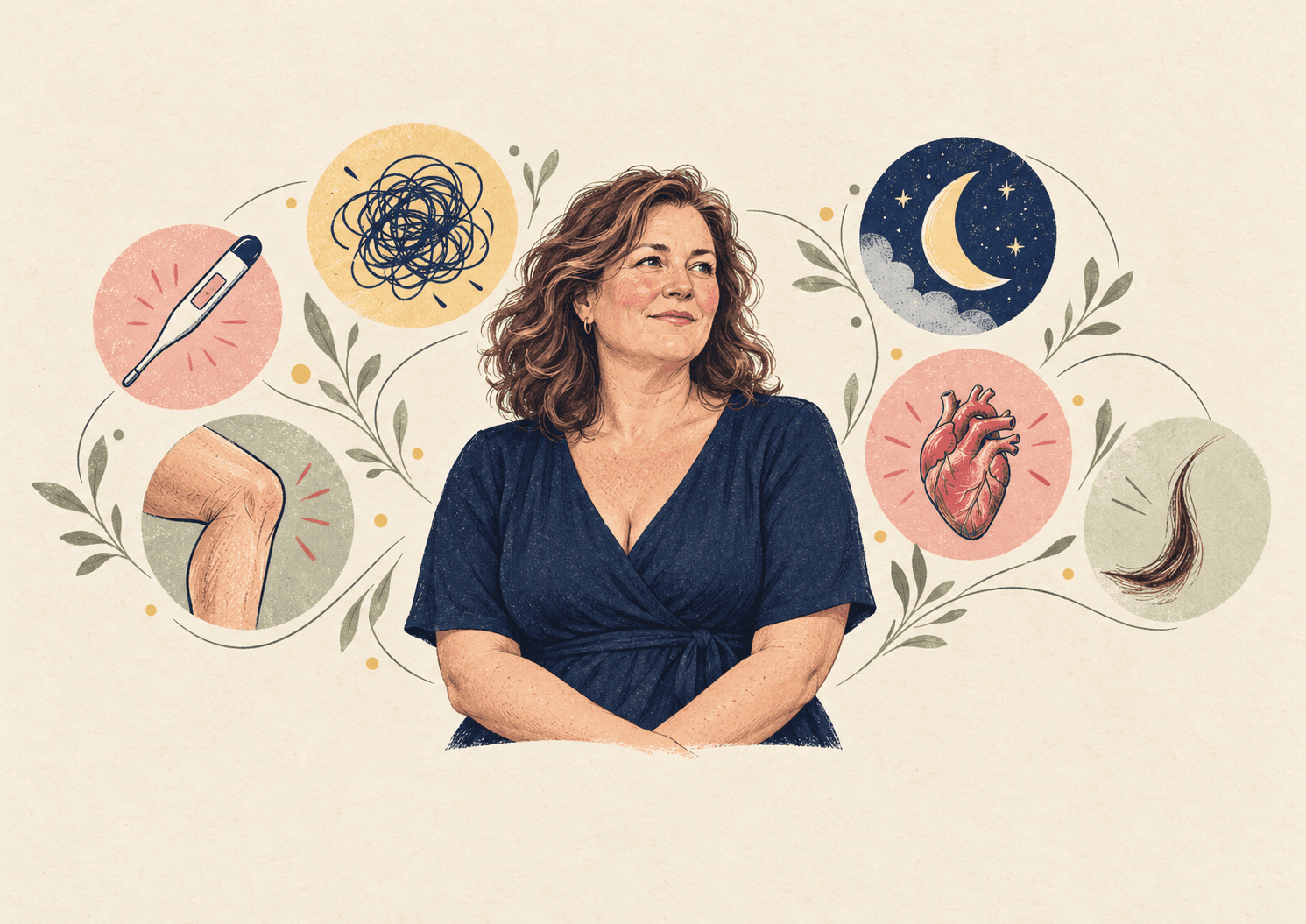
From brain fog and joint pain to palpitations and dry skin, the full list of menopause symptoms, including the ones most women are never told about.
3 min read
 Symptoms
Menopause and Libido: Why Desire Changes and What Helps
Changes in desire during menopause are common and rarely only about hormones. The hormonal, emotional and relationship factors, and what can help.
4 min read
 Treatment
Types of HRT: Patches, Gels, Tablets and Body-Identical Options
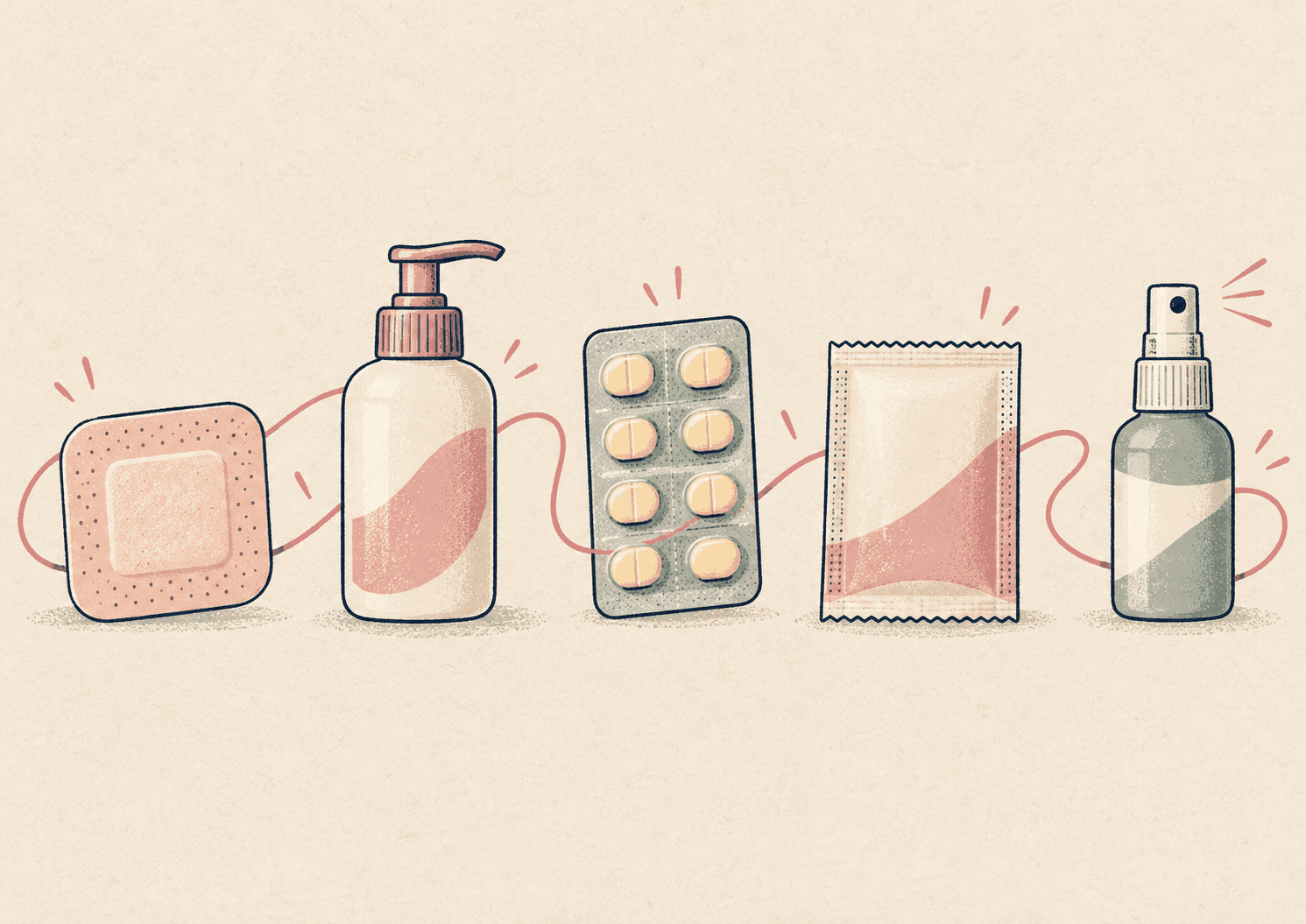
Patches, gels, tablets, sprays and vaginal oestrogen explained, plus the difference between regulated body-identical and compounded bioidentical hormones.
6 min read