Your Hormones Explained: From Your First Period to Your Last
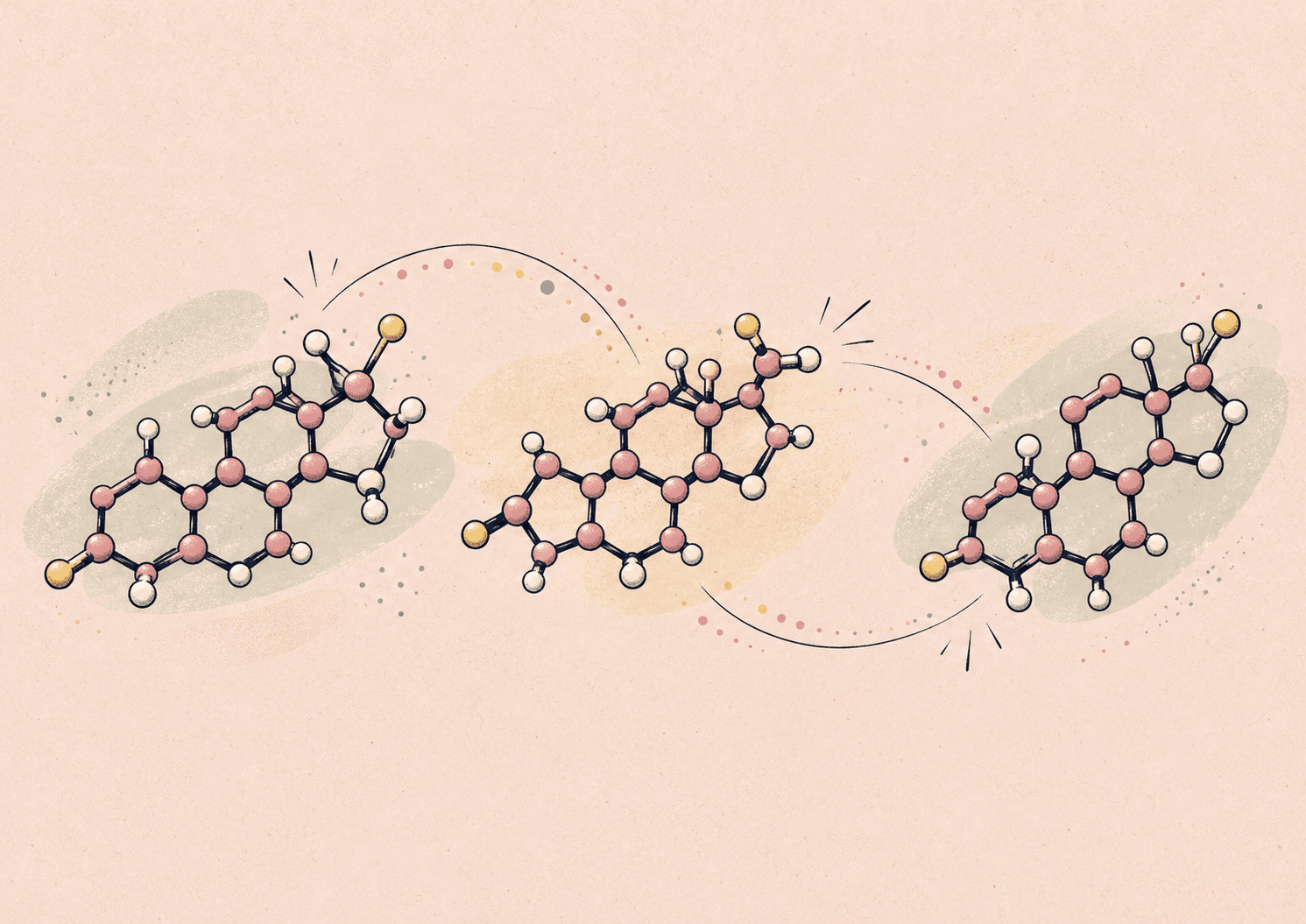
Most women left school biology knowing that hormones had something to do with periods and moods, which was enough to pass the exam and rather less help at 45. Five hormones do most of the work across your reproductive life. Your brain makes FSH and LH, your ovaries make oestrogen and progesterone, and your ovaries and adrenal glands between them make testosterone.
Together they run your menstrual cycle, and oestrogen in particular does a great deal more besides, which is why their fall at menopause reaches so far beyond your periods. Once you know how much of your body they keep running in the background, the symptoms of perimenopause start to make sense. The long-term health effects of menopause also look less like random bad news and more like logical consequences you can plan for.
What do FSH, LH, oestrogen and progesterone do?
Follicle-stimulating hormone (FSH) and luteinising hormone (LH) both come from the pituitary gland in your brain. FSH stimulates follicles to develop in the ovaries, and LH triggers ovulation, the release of a mature egg. Think of them as the brain's messages to the ovaries, with oestrogen and progesterone as the ovaries' replies.
Oestrogen comes mainly from the ovaries during your reproductive years. It builds the lining of the womb and runs the first half of your menstrual cycle, and it does a great deal else that we come to below.
Progesterone is made after ovulation and dominates the second half of the cycle. If you do not become pregnant, oestrogen and progesterone both fall, the lining sheds, and the cycle starts again.
What does oestrogen do in the rest of the body?
Scientists have found oestrogen receptors in the brain, the cardiovascular system, bones, skin, gut, bladder and urinary tract. That makes oestrogen a hormone for the whole body, doing several jobs at once.
In your brain, it helps regulate serotonin, dopamine and noradrenaline, the chemical messengers behind mood, memory and your response to stress. In your cardiovascular system, it helps keep artery walls flexible and supports a healthier cholesterol balance.
In your skeleton, it acts as a brake on the cells that break down bone. In your skin, it drives collagen production and helps hold in moisture.
When oestrogen falls at menopause, each of these systems feels it, which helps explain why the list of menopause symptoms runs into the dozens and goes well beyond hot flushes and night sweats. Our guide to oestrogen and menopause looks at each of these effects in more depth.
What are the three types of oestrogen?
Your body makes three types of oestrogen, and they do different jobs.
Oestradiol is the most potent. The follicles in your ovaries produce it through your reproductive years, it drives most of oestrogen's effects around the body, and it is the form that falls at menopause.
Oestrone is weaker. Fat tissue produces it, and it becomes the main oestrogen after menopause.
Oestriol matters mainly during pregnancy.
When a menopause blood test measures oestrogen, it almost always measures oestradiol, and oestradiol is also the form used in most HRT preparations.
Do women need testosterone?
Testosterone rarely comes up in conversations about women's health, yet your ovaries and adrenal glands make it throughout your reproductive life. Women produce far less than men, though still enough to matter biologically.
It contributes to libido, energy, mood, focus, muscle maintenance and bone density. Levels decline gradually through adult life, separately from menopause, and can fall further at menopause as the ovaries contribute less.
Standard NHS menopause blood panels do not usually include testosterone. NICE guidelines recognise testosterone therapy as a treatment option, and a 2019 global consensus statement from several major menopause societies sets out the evidence on its use, although in practice relatively few women are prescribed it. Our guide to testosterone in women explains what it does and what the research shows.
How do your hormones change in perimenopause?
In early perimenopause, progesterone usually falls first. Your body only makes it after a successful ovulation, and ovulation becomes less reliable as the quality of follicles declines. Regular periods can carry on while progesterone output falls, as our guide to progesterone in perimenopause explains.
Oestrogen then starts to fluctuate more erratically, and FSH rises as your brain tries to compensate. In late perimenopause, the fall in oestrogen becomes more sustained. After menopause, everything settles at a new, lower baseline.
Watching how these hormones move together over time, against your own earlier results, tells you far more than any single reading, which is the thinking behind what we test.
Questions women ask
Which hormone drops first in perimenopause?
Progesterone usually falls first. Your body makes it after ovulation, and ovulation becomes less reliable in early perimenopause, so regular periods can carry on while progesterone output falls. Oestrogen starts to fluctuate after that.
What is the difference between oestrogen and oestradiol?
Oestrogen is the name for a group of three hormones, and oestradiol is the most potent of them. The ovaries produce it through your reproductive years, and it is the form that falls at menopause. Menopause blood tests that measure oestrogen almost always measure oestradiol.
Do women produce testosterone?
Yes. A woman's ovaries and adrenal glands make testosterone throughout her reproductive life, at much lower levels than in men. It contributes to libido, energy, mood, focus, muscle and bone. Levels decline gradually through adult life and can fall further at menopause.
References
Burger HG, et al. (2007). A review of hormonal changes during the menopausal transition. Human Reproduction Update, 13(6): 559–565.
Davis SR, et al. (2019). Global consensus position statement on the use of testosterone therapy for women. Journal of Clinical Endocrinology and Metabolism, 104(10): 4660–4666.
NICE. (2015, updated 2024). Menopause: identification and management. Guideline NG23.
Ready to thrive in midlife?
Book my testKeep reading.
 Hormones
Progesterone in Perimenopause: The Hormone That Goes First
Progesterone often declines before oestrogen. Why it happens, how it can feel, from sleep to mood to heavier periods, and what the research says.
3 min read
 Hormones
Testosterone in Women: What It Does in Menopause and How Therapy Works
What testosterone does for women, how levels change around menopause, what the evidence shows for therapy and how it is prescribed in the UK.
5 min read
 Symptoms
Why Am I So Tired? Fatigue and Exhaustion in Perimenopause
Why am I so tired in perimenopause? What drives fatigue and exhaustion, the common causes worth checking with your GP, and the everyday steps that help.
6 min read