Why Am I So Tired? Fatigue and Exhaustion in Perimenopause

"Why am I so tired all the time?" If you have typed some version of that into Google in your forties, the answer in perimenopause usually has several parts. Broken sleep, shifting hormones and a stress system that reacts more strongly can all drain your energy at once. Some common, treatable causes of tiredness, such as low iron or an underactive thyroid, also tend to turn up in the same years, so it pays to look at the whole picture.
You have plenty of company. In a survey of more than 17,000 women who use the Flo app, published in the journal Menopause in 2026, fatigue was the most commonly reported symptom among the 12,681 women aged 35 and over. 83% reported it, and 83% reported physical and mental exhaustion.
Tired or fatigued: is there a difference?
The NHS describes fatigue as "an overwhelming tiredness that isn't relieved by rest and sleep". Ordinary tiredness lifts after a good night or a quiet weekend, while fatigue stays put and drags on your body and your concentration at once.
Why does perimenopause make you so tired?
Your nights get lighter
The NHS lists trouble getting to sleep or staying asleep among the symptoms of perimenopause, and says sleep problems may be worse if you also have night sweats. Progesterone, a hormone with a calming effect on the brain, starts to fall early in perimenopause, and your sleep can change weeks or months before the first hot flush. Our guide to sleep in menopause explains each of those drivers.
Your stress response runs hotter
Cortisol is your main stress hormone. As oestrogen falls, the body's stress system tends to react more strongly, so the same pressures can set off a bigger cortisol response that takes longer to settle. Our piece on stress and cortisol in menopause covers this in more depth.
Mood and energy pull on each other
The NHS notes that low mood, memory problems and poor concentration can feel worse when you have sleep problems and feel very tired. Exhaustion and mood often travel together, a link our guide to mood changes in perimenopause unpacks.
Which other causes of tiredness are worth ruling out?
The NHS says many cases of tiredness come down to stress, too little sleep, diet and other parts of daily life. A few medical causes are common in your forties and fifties, and each has its own treatment.
Low iron. The NHS says periods can become heavier during perimenopause, and heavy periods are a very common cause of iron deficiency anaemia, when your body runs short of iron. Its symptoms can include tiredness and lack of energy, shortness of breath and noticeable heartbeats. A GP will usually start with a blood test, and if you need treatment, iron tablets usually run for about 6 months.
An underactive thyroid. This means your body makes too little thyroid hormone, and the NHS lists extreme tiredness and difficulty concentrating among the symptoms. The most common cause in the UK is Hashimoto's disease, which is most common in women and usually starts between 30 and 50. Thyroid and perimenopause symptoms overlap so much that one often passes for the other, as our thyroid and menopause guide explains.
Low vitamin B12 or folate. A shortage of either vitamin can cause a type of anaemia. The NHS lists feeling weak or tired among its symptoms, which usually develop gradually.
Any of these can sit alongside perimenopause, and several show up in a blood test. Hysteron's test reads ferritin (your iron stores), haemoglobin, thyroid markers, B12 and folate alongside your hormones, and testing again later shows how they move. Our guide to whether a perimenopause blood test is right for you explains what a useful panel can include.
What helps with perimenopause fatigue?
Move a little, often. The NHS says regular exercise leaves you less tired in the long run, and that even a single 15-minute walk can give you an energy boost.
Keep your sleep regular. Go to bed and get up at the same times each day, avoid naps in the day and give yourself time to relax before bed. A cooler bedroom, around 16 to 18°C, means less waking from night sweats.
Eat little and often. The NHS suggests regular meals and healthy snacks every 3 to 4 hours, rather than one large meal less often.
Time your coffee and your wine. The NHS says the effects of caffeine can last up to 7 hours, which can disrupt your sleep and leave you tired the next day. After drinking alcohol you will feel tired the next day, even after a full 8 hours in bed.
Talk it through. The NHS says there is some evidence that talking therapies might help with tiredness caused by stress, anxiety or low mood, and a GP can refer you on the NHS. A GP or menopause specialist can also talk you through hormonal and non-hormonal treatments for perimenopause symptoms.
When to see your GP
Book a GP appointment if tiredness does not lift with rest and sleep, or if you think you might have low iron, an underactive thyroid or low B12 or folate. Go too if your bleeding pattern has changed and you are bleeding more than before, if you bleed between periods or after sex, or if your periods are affecting your daily life. If you have not had a period for 12 months or more and then have any vaginal bleeding, see your GP about it.
Questions women ask
Is extreme tiredness a sign of perimenopause? Fatigue and exhaustion are among the most commonly reported perimenopause symptoms. In a 2026 survey of more than 17,000 women, 83% of those aged 35 and over reported fatigue. Tiredness has many other causes too, so if it does not lift with rest, see your GP.
Why am I so tired in perimenopause even when I sleep? Falling progesterone, night sweats and a more reactive stress system can all make sleep lighter and less refreshing, even when you spend enough hours in bed. Low iron, an underactive thyroid and low B12 or folate can also cause tiredness that sleep does not fix.
Can heavy periods make you tired? Yes. Periods can become heavier during perimenopause, and the NHS says heavy periods are a very common cause of iron deficiency anaemia, which can cause tiredness and lack of energy. The NHS lists feeling tired or short of breath a lot among the signs of heavy periods.
What blood tests check for tiredness? For suspected iron deficiency anaemia, a GP will usually do a blood test to check your red blood cells, and blood tests can also check your thyroid, B12 and folate.
References
The Menopause Society. (2026). International differences exist in knowledge gaps and most common perimenopause symptoms. Press release on a study in Menopause. https://menopause.org/press-releases/international-differences-exist-in-knowledge-gaps-and-most-common-perimenopause-symptoms
NHS. Symptoms of menopause and perimenopause. https://www.nhs.uk/conditions/menopause-and-perimenopause/symptoms/
NHS. Self-help tips to fight tiredness. https://www.nhs.uk/live-well/sleep-and-tiredness/self-help-tips-to-fight-fatigue/
NHS. Iron deficiency anaemia. https://www.nhs.uk/conditions/iron-deficiency-anaemia/
NHS. Heavy periods. https://www.nhs.uk/conditions/heavy-periods/
NHS. Underactive thyroid (hypothyroidism): symptoms. https://www.nhs.uk/conditions/underactive-thyroid-hypothyroidism/symptoms/
NHS. Vitamin B12 or folate deficiency anaemia: symptoms. https://www.nhs.uk/conditions/vitamin-b12-or-folate-deficiency-anaemia/symptoms/
Ready to thrive in midlife?
Book my testKeep reading.
 Treatment
How to Talk to Your GP About Menopause (Including What to Say If You Get Dismissed)
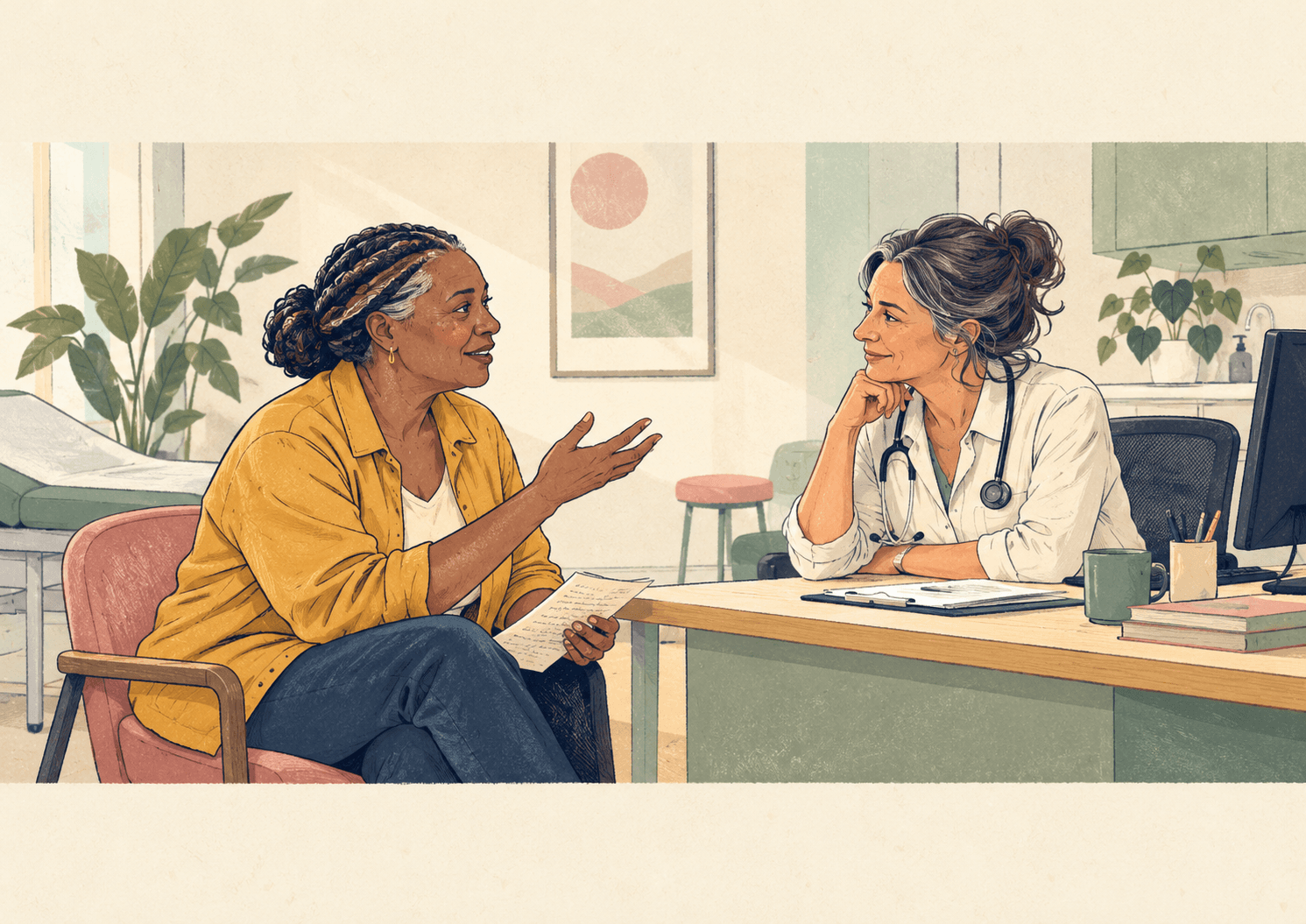
What to bring, what to ask for and what to say if you feel dismissed. A practical guide to getting more from a GP appointment about perimenopause.
4 min read
 Symptoms
Mood Changes in Perimenopause: Anxiety, Low Mood, and Your Hormones
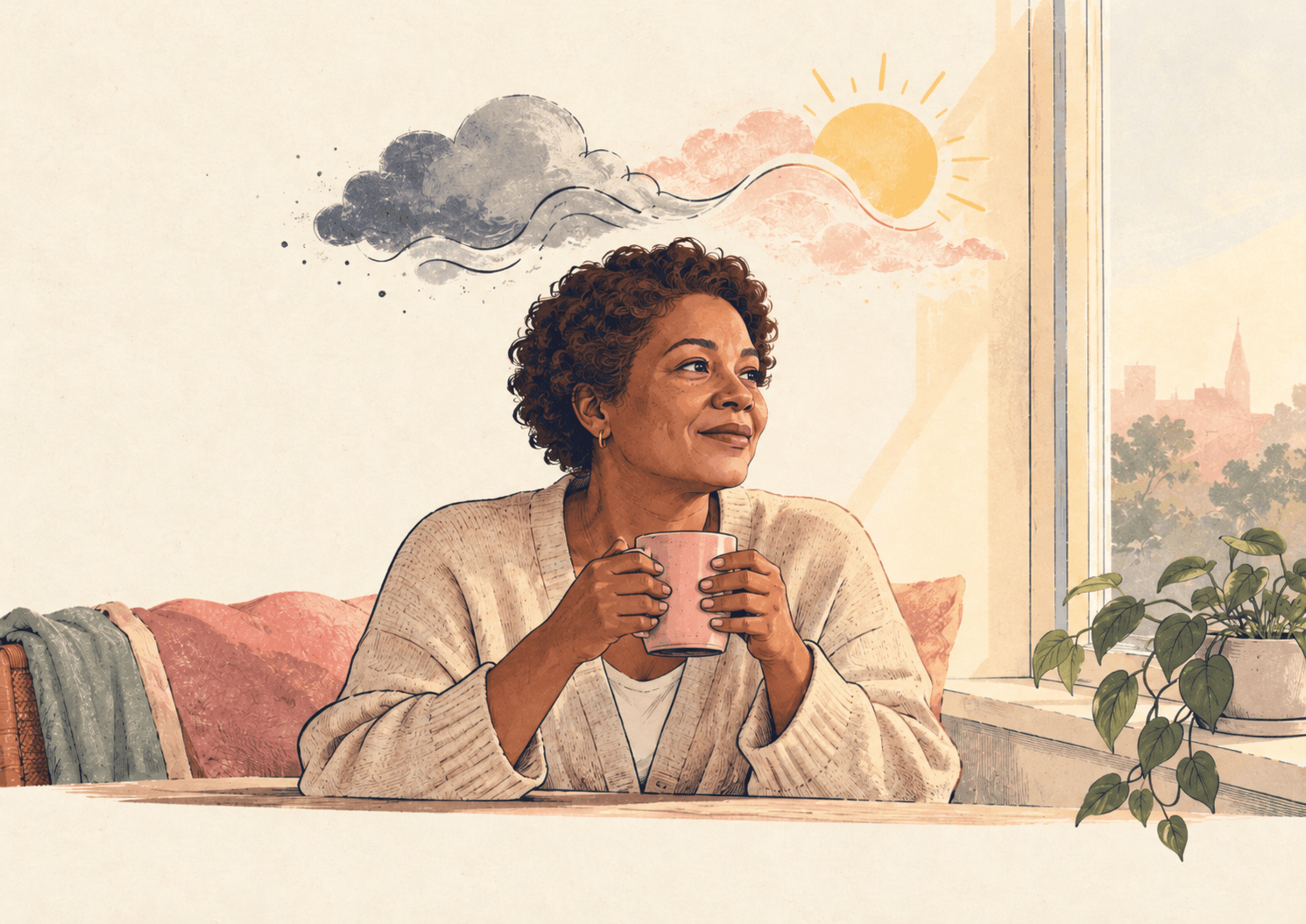
Anxiety, low mood and irritability can be part of perimenopause. How hormones affect mood, who is more likely to be affected, and what support helps.
4 min read
 Hormones
Stress and Menopause: Cortisol, Your Hormones and What Helps
Why stress can feel harder in perimenopause, how cortisol and oestrogen interact, and the approaches with evidence behind them for feeling steadier.
6 min read