Menopause and Your Eyes: The Vision Changes Nobody Warns You About
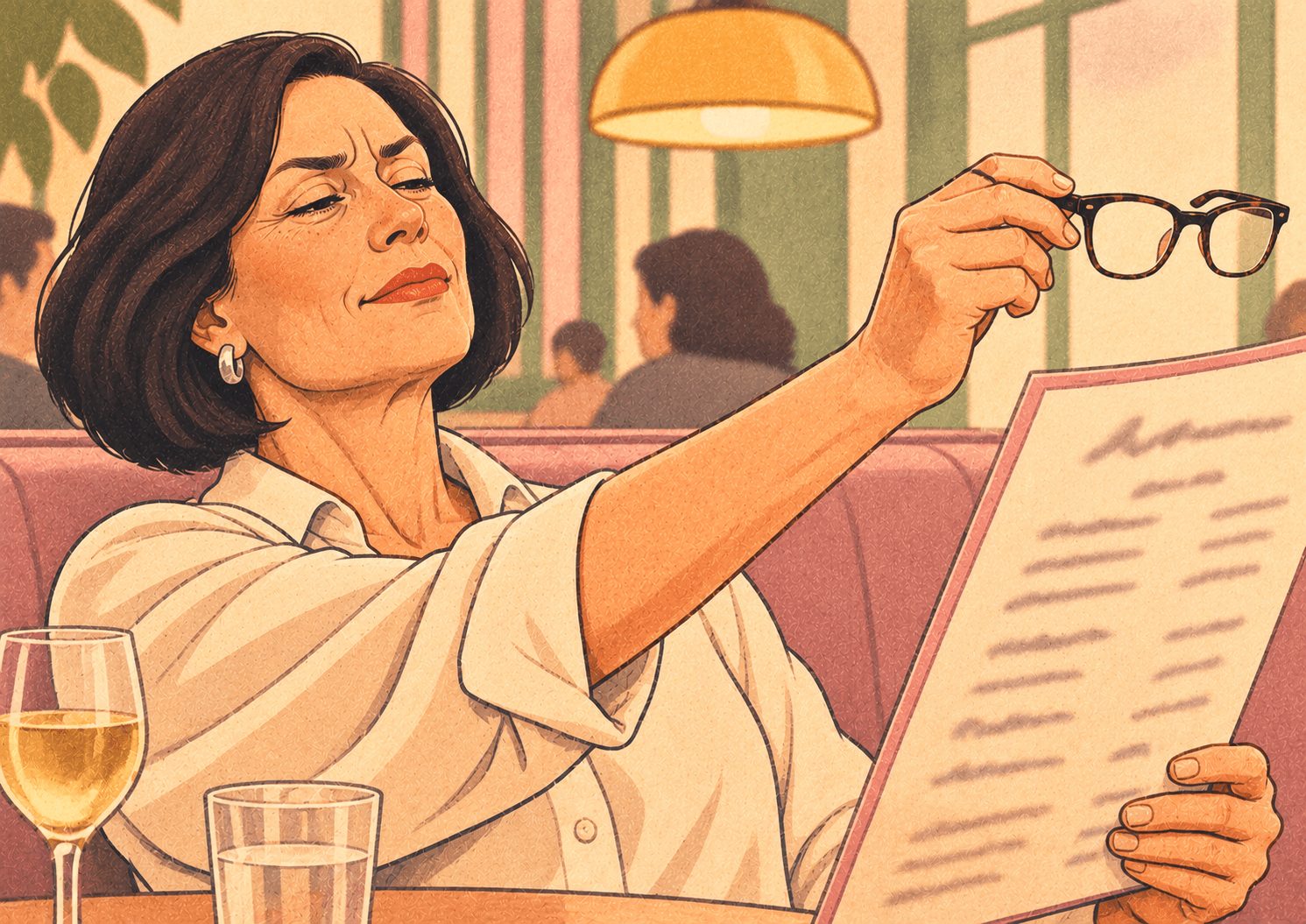
Gritty, sore eyes by mid-afternoon, or vision that blurs and clears again, are changes plenty of women notice in their 40s and 50s without ever connecting them to hormones. Menopause can affect your eyes. Dry eye disease becomes much more common after menopause, and oestrogen plays a part, since the eyes are full of oestrogen receptors that help keep them comfortable and lubricated.
The good news is that for most women with mild to moderate symptoms, the first-line treatment works well. The eye rarely features in menopause conversations, and most women have never heard that oestrogen acts there at all. That gap makes it easy to put the discomfort down to screens or tiredness, which can play their part too, without considering that hormones may be in the mix.
Why does menopause cause dry eyes?
Researchers have found oestrogen receptors across the eye. They sit in the cornea and conjunctiva, in the lacrimal glands that produce tears and in the meibomian glands, which make the oily layer that stops your tears evaporating. The lens and retina have them too. Oestrogen supports tear production, influences the make-up and stability of the tear film and has anti-inflammatory effects on the surface of the eye.
When oestrogen falls at menopause, tear production may drop and the quality of the tear film can deteriorate. The surface of the eye then becomes more prone to inflammation and dryness.
What are the symptoms of dry eye in menopause?
The typical signs are dryness, grittiness, burning and blurred vision that comes and goes. Many women are surprised to find their eyes watering more. When the surface of the eye dries out, it responds by producing floods of reflex tears, and those tears don't fix the underlying dryness. Eye symptoms have other possible causes too, so blurred vision that persists, or any sudden change in your sight, is worth getting checked by an optometrist or GP. Our guide to the full list of menopause symptoms shows where eye changes sit alongside other symptoms.
What helps dry eyes during menopause?
Preservative-free artificial tear drops are the first-line option and help most women with mild to moderate symptoms.
A few other measures have evidence behind them. Omega-3 fatty acids have modest evidence for improving how the meibomian glands work. A warm compress on the eyelids for ten minutes a day improves meibomian gland secretion.
For moderate to severe dry eye, a referral to an ophthalmologist, a doctor who specialises in eyes, is worthwhile. Cyclosporin eye drops, which target the inflammation behind dry eye disease, are one of the options a specialist may discuss with you.
Do you need more eye tests after menopause?
Regular eye examinations every two years matter after menopause. They screen for glaucoma and macular degeneration, both of which become more common with age. For more on why oestrogen reaches so far beyond your cycle, see oestrogen and menopause.
Eye changes can be one of the smaller signals of a wider hormonal shift. Keeping track of them alongside how your hormones change over time is part of knowing your own normal, which is what the test is designed to support.
Questions women ask
Can menopause cause dry eyes?
Dry eye disease becomes much more common after menopause. Oestrogen supports tear production and the stability of the tear film, and it calms inflammation on the surface of the eye. When oestrogen falls, tear production may drop and the eye becomes more prone to dryness.
Why are my eyes watering if they are dry?
Watery eyes are a common sign of dry eye, though not the only possible cause. When the surface of the eye dries out, it produces floods of reflex tears. Those tears don't solve the underlying dryness, so the discomfort continues, and an optometrist or GP can look into what is behind it.
What helps menopause dry eyes?
Preservative-free artificial tears are the first-line option and help most women with mild to moderate symptoms. A daily ten-minute warm compress on the eyelids improves meibomian gland secretion, and omega-3 has modest evidence behind it. For moderate to severe symptoms, an ophthalmologist may discuss options such as cyclosporin eye drops.
References
Sullivan DA, et al. (2017). TFOS DEWS II sex, gender, and hormones report. Ocular Surface, 15(3): 284–333.
Versura P & Campos EC. (2005). Menopause and dry eye. Gynecological Endocrinology, 20(5): 289–298.
Ready to thrive in midlife?
Book my testKeep reading.
 Foundations
Menopause Symptoms: The Full List
From brain fog and joint pain to palpitations and dry skin, the full list of menopause symptoms, including the ones most women are never told about.
3 min read
 Hormones
Oestrogen: What It Does, Why It Matters, and What Happens When It Falls
Oestrogen does far more than run your cycle. What it does for your brain, heart, bones and skin, and what changes as levels fall in perimenopause.
4 min read
 Symptoms
Why Am I So Tired? Fatigue and Exhaustion in Perimenopause
Why am I so tired in perimenopause? What drives fatigue and exhaustion, the common causes worth checking with your GP, and the everyday steps that help.
6 min read