How Long Does Perimenopause Last? What to Expect
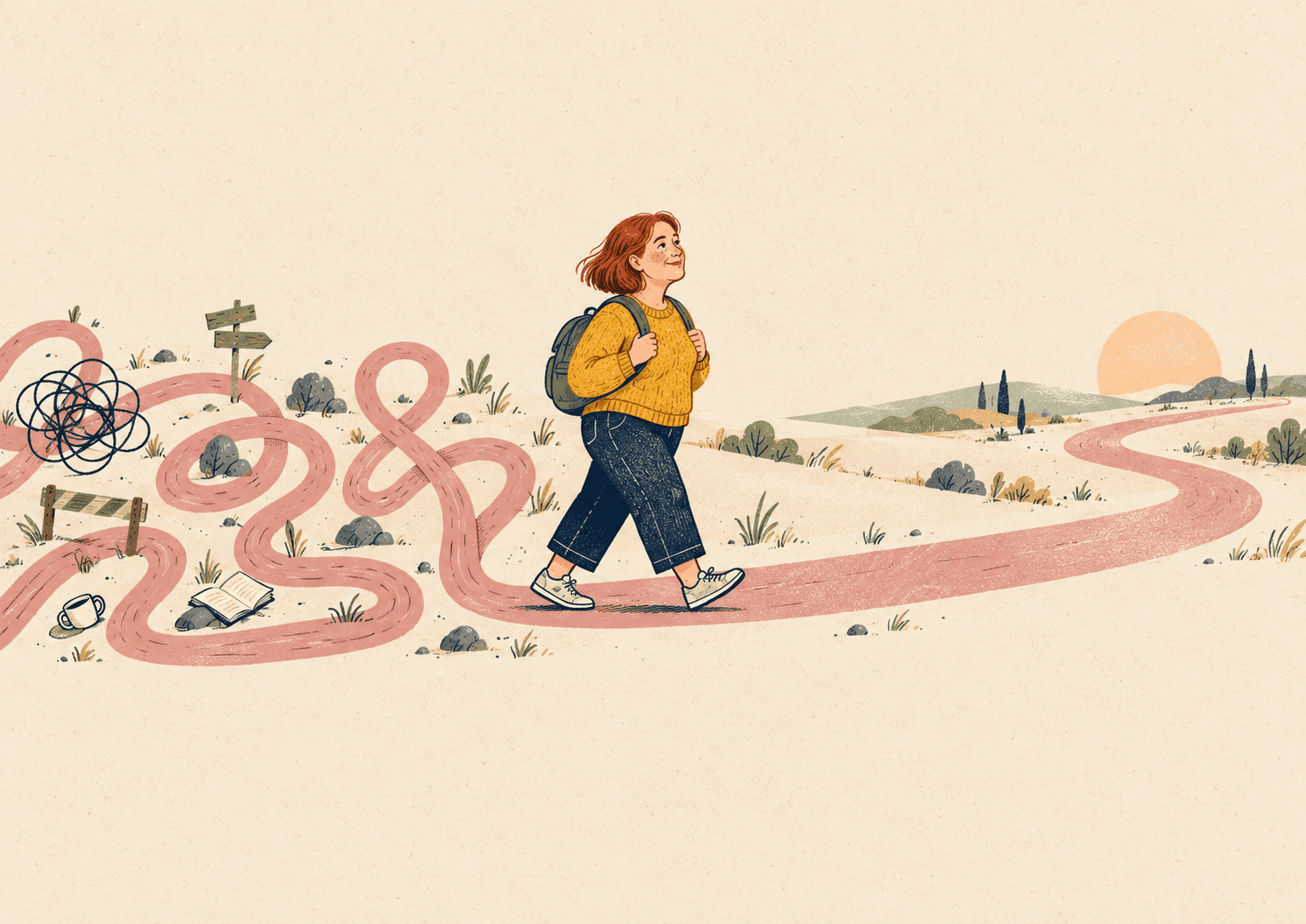
"When does it end?" is one of the first things women want to know about perimenopause. On average it lasts four to eight years. Some women are through it in two years, others are still in it after a decade, and both ends of that range are normal.
Nobody can pin an individual timeline to a date. Researchers do know a fair amount about what shapes it, and the transition follows a recognisable pattern. Knowing the stages, and roughly where the worst of the symptoms tends to fall, gives something that can feel open-ended a beginning, a middle and an end.
What is the average length of perimenopause?
Research puts the average at four to eight years. A major 2015 study in JAMA Internal Medicine, which followed women for up to 17 years, found that hot flushes and night sweats lasted a median of 7.4 years in total.
It also found that women whose symptoms started earlier tended to have a longer transition overall. The spread between women is wide, and a short transition and a long one both fall within normal experience.
What affects how long perimenopause lasts?
Genetics is probably the most useful single predictor. If you want a rough guide to when your own menopause will arrive, ask your mum, or your older sister. The link is imperfect, yet it is strong enough to tell you something.
Smoking is linked with an earlier menopause, by around one to two years in most studies. Body composition plays a part too, since fat tissue produces a weak form of oestrogen, which can delay the transition a little.
Ethnicity matters as well. Research from the SWAN study found that Black women tend to have a longer transition and longer-lasting hot flushes and night sweats, and Hispanic women were more likely to have an early menopause.
These are patterns across populations and cannot predict what will happen to you as an individual. They are still worth knowing, particularly as most population averages come from mainly white study groups.
What are the stages of perimenopause?
Clinicians divide perimenopause into two stages, using the STRAW+10 framework, the internationally accepted way of classifying the menopausal transition.
Early perimenopause is marked in the framework by cycles that start to vary, defined as a difference of seven days or more from the usual cycle length. Periods still arrive, FSH tends to rise, and symptoms may appear, although they are often not yet severe.
Late perimenopause is defined by gaps of 60 days or more between periods. Oestrogen falls in a more sustained way, and symptoms often intensify. This phase usually lasts one to three years before the final period.
When do perimenopause symptoms peak, and when do they ease?
Symptoms tend to be at their most intense through late perimenopause and the first year or two after the final period. For many women, hot flushes and night sweats peak around the last period and then ease over the following two to five years. In the SWAN study, frequent hot flushes and night sweats lasted a median of 7.4 years in total, and around ten years for Black women.
Genitourinary symptoms, such as vaginal dryness and bladder changes, follow a different course. Lasting low oestrogen drives them, more than the transition itself, so they tend to persist without treatment.
They are worth raising with your GP or menopause specialist whenever they appear, since waiting tends not to resolve them. You can read more in our guide to the full list of menopause symptoms, and our piece on what age menopause starts covers the timing in more detail.
A record of how your cycle, symptoms and hormones change over months gives you and your doctor far more to go on than one snapshot, which is the thinking behind what we test.
Questions women ask
How do you know you are in late perimenopause?
The STRAW+10 framework that clinicians use describes late perimenopause as the stage when gaps of 60 days or more appear between periods, a phase that usually lasts one to three years before the final period. Cycle length is only one part of the picture, so a GP or menopause specialist is the person to help you work out where your own history fits.
How long do hot flushes last after menopause?
For many women, hot flushes and night sweats peak around the final period and ease over the following two to five years. A 2015 study from SWAN found a median total duration of 7.4 years, and longer for Black women.
Does perimenopause last longer if it starts early?
It can. The 2015 study in JAMA Internal Medicine found that women whose hot flushes and night sweats started earlier tended to have a longer transition overall.
References
Avis NE, et al. (2015). Duration of menopausal vasomotor symptoms over the menopause transition. JAMA Internal Medicine, 175(4): 531–539.
Harlow SD, et al. (2012). Executive summary of the Stages of Reproductive Aging Workshop +10. Menopause, 19(4): 387–395.
SWAN Study. (2001–ongoing). Study of Women's Health Across the Nation. swanstudy.org
Avis NE, et al. (2015). Duration of menopausal vasomotor symptoms over the menopause transition. JAMA Internal Medicine, 175(4): 531–539.
Midgette AS & Baron JA. (1990). Cigarette smoking and the risk of natural menopause. Epidemiology, 1(6): 474–480.
Ready to thrive in midlife?
Book my testKeep reading.
 Foundations
What Is Perimenopause? The Stage Nobody Warned You About
Perimenopause is the transition before menopause, and often the most disruptive part. What it is, what it feels like, and why it's so often missed.
4 min read
 Foundations
What Age Does Menopause Start? The Full Picture
What's typical, what counts as early, and what shapes your own timeline. Why knowing where you are matters for planning, testing and long-term health.
3 min read
 Symptoms
Why Am I So Tired? Fatigue and Exhaustion in Perimenopause
Why am I so tired in perimenopause? What drives fatigue and exhaustion, the common causes worth checking with your GP, and the everyday steps that help.
6 min read